
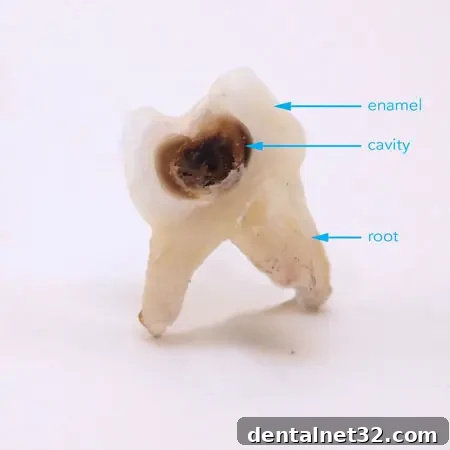
Understanding Tooth Decay: How Dentists Find, Treat, and Prevent Cavities
Tooth decay, commonly known as a cavity, is one of the most prevalent health issues worldwide. It affects people of all ages, from young children to seniors. But what exactly is a cavity, and how can your dentist tell if you have one? Understanding the process of tooth decay is the first step toward effective prevention and maintaining a healthy, radiant smile. This comprehensive guide will explore how dentists diagnose cavities, what causes them, and the essential steps you can take to protect your teeth.
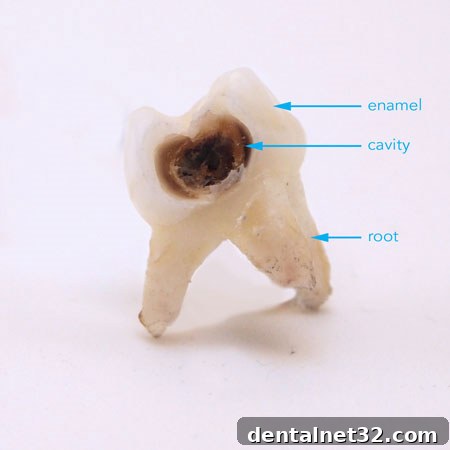
How Dentists Expertly Detect Tooth Decay
Detecting a cavity isn’t always as simple as spotting a visible hole. Dentists employ a combination of techniques and tools to identify decay, often long before it becomes visible to the naked eye. Early detection is crucial for simpler, less invasive treatment.
1. The Visual Examination
The first step in any dental check-up is a thorough visual inspection. Your dentist will carefully examine each tooth’s surface, looking for any signs of decay. This can start as a subtle white or chalky spot on the enamel, which indicates the beginning of mineral loss. As the decay progresses, these spots can darken to a brown or black color. In advanced stages, an actual hole or pit in the tooth becomes evident.
2. The Dental Explorer
You’re likely familiar with the small, pointed metal instrument your dentist uses to probe your teeth. This is called a dental explorer. Healthy enamel is hard and resilient. When the dentist gently presses the explorer against a tooth’s surface, it should feel solid. However, if the explorer sticks or feels soft, it’s a strong indication that the enamel has been compromised by decay, signaling the presence of a cavity.
3. Diagnostic X-Rays (Radiographs)
X-rays are an indispensable tool for modern dentistry. They allow your dentist to see what’s happening beneath the surface of the enamel and between the teeth—areas that are impossible to inspect visually. An X-ray clearly reveals decay between teeth, underneath existing fillings, or in the inner layers of the tooth. This imaging technology is the most definitive way to diagnose cavities in their earliest stages, ensuring timely intervention.
What Are the Root Causes of Cavities?
To prevent cavities, it’s essential to understand what causes them. The process is a battle between destructive forces and protective measures happening inside your mouth every day. The primary culprit is a sticky, colorless film of bacteria called plaque.
Your mouth is home to millions of bacteria, many of which are harmless or even beneficial. However, certain types of harmful bacteria feed on the sugars and starches from the food and drinks you consume. As these bacteria metabolize the sugars, they produce acids as a byproduct. These acids are powerful enough to attack and dissolve the minerals in your tooth enamel in a process called demineralization.
If plaque is not regularly and thoroughly removed through brushing and flossing, these acid attacks continue, gradually weakening the enamel. Over time, a small hole forms, which grows larger as the decay progresses into the deeper layers of the tooth. Saliva helps to neutralize these acids and provides minerals to repair the enamel, but if sugar consumption is high and oral hygiene is poor, saliva can’t keep up.
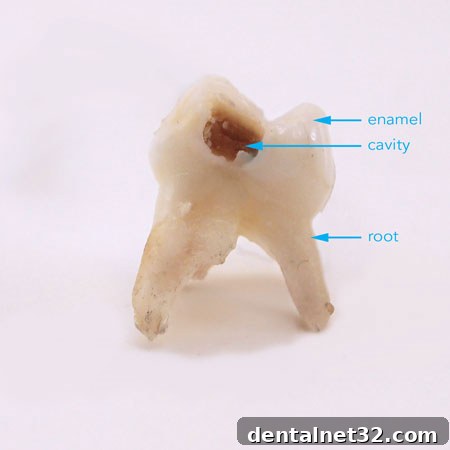
Why Flossing is Non-Negotiable: A Real-World Example
Consider the case of an 8-year-old boy whose baby tooth had to be extracted. An examination of the tooth revealed deep cavities on both sides—the surfaces that touch the adjacent teeth. Interestingly, the top chewing surface of the tooth, which the child brushed diligently every day, was completely free of decay. The problem was that plaque and food particles remained trapped between his teeth because he wasn’t flossing.
This neglect allowed bacteria to produce acid continuously in those hard-to-reach areas. The decay progressed through the hard outer enamel and into the softer dentin layer, eventually reaching the tooth’s nerve tissue (the pulp). This led to a severe infection and a painful, pus-filled abscess at the root. Because a permanent tooth was already emerging, the dentist chose to extract the decayed baby tooth. This scenario powerfully illustrates that brushing alone is not enough; flossing is essential to clean the 35% of your tooth surfaces that a toothbrush cannot reach.
It’s vital for parents to help their children floss until they develop the manual dexterity to do it effectively on their own, which is typically around the age of 9 or 10.
A Comprehensive Strategy for Cavity Prevention
The good news is that tooth decay is almost entirely preventable. A proactive approach combining excellent at-home care with regular professional support can keep your smile cavity-free for a lifetime.
1. Master Your Brushing Technique
Brushing your teeth is the foundation of good oral hygiene. For optimal results, you should brush for at least two minutes, twice a day, using a soft-bristled toothbrush and fluoride toothpaste. Angle the brush at 45 degrees toward the gum line and use gentle, circular motions to clean the outer, inner, and chewing surfaces of all your teeth.
2. Make Flossing a Daily Habit
As highlighted earlier, flossing is critical for removing plaque and food debris from between your teeth and under the gum line. Whether you use traditional string floss, a water flosser, or dental picks, the key is to do it consistently at least once a day.
3. Harness the Power of Fluoride
Fluoride is a natural mineral that has been proven to be a powerful weapon against tooth decay. It works by strengthening tooth enamel, making it more resistant to acid attacks. It can even reverse the very early stages of demineralization. Ensure you are using a fluoride toothpaste, and ask your dentist if a fluoride mouthwash or professional fluoride treatment would be beneficial for you or your children.
4. Adopt a Tooth-Friendly Diet
What you eat and drink has a direct impact on your oral health. Limit your intake of sugary foods and drinks like candy, soda, and pastries, as these provide fuel for acid-producing bacteria. Be mindful of frequent snacking, which creates a constant acidic environment in your mouth. Instead, opt for tooth-healthy foods like fresh fruits and vegetables, cheese, yogurt, and nuts. Drinking plenty of water, especially after meals, helps rinse away food particles and neutralize acids.
5. Prioritize Regular Professional Dental Care
No matter how well you care for your teeth at home, professional cleanings and check-ups are essential. A dental hygienist uses specialized tools to remove hardened plaque, known as tartar, which cannot be removed with a regular toothbrush. These routine visits allow your dentist to spot potential problems early, recommend preventive treatments, and ensure your oral hygiene routine is effective.
Protect Your Smile for Life
Cavities are not an inevitable part of life. By understanding their causes and committing to a consistent oral hygiene routine, you can significantly reduce your risk of tooth decay. A partnership between your daily habits and professional dental care is the ultimate defense for your smile. If you have concerns about tooth sensitivity, have noticed discoloration, or are simply due for a check-up, don’t delay. Taking action today is the best investment you can make in your long-term oral health.