
The Unexpected Diagnosis: Why Oral Cancer Screening Is a Lifesaver
Lydia Valdez, a vibrant 70-year-old from California, initially dismissed the persistent spot on her tongue as a simple canker sore. It was an annoyance, perhaps caused by an old dental crown rubbing against the tissue. The thought of something as serious as oral cancer never crossed her mind. After all, she didn’t fit the typical profile. She was a non-smoker with no family history of cancer and none of the widely-known risk factors. Life was busy, and despite having health benefits, a trip to the dentist had been pushed to the bottom of her to-do list for several years.
The nagging sore eventually prompted her to mention it during a routine check-up with her primary care physician. This small mention set off a chain of events that would ultimately save her life. Her doctor referred her to an Ear, Nose, and Throat (ENT) specialist, who, in turn, recommended she see a dentist for a closer examination. That’s when she met Dr. John Tchaboukian, a Coast Dental dentist with two decades of experience.
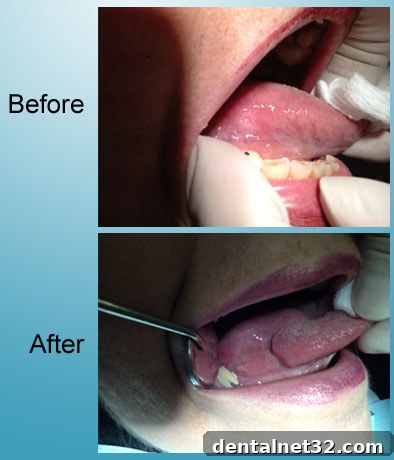
Dr. Tchaboukian’s trained eye immediately raised a red flag. The lesion didn’t look like a simple irritation. To gain a clearer understanding, he recommended an advanced oral cancer screening using Identafi®, a device that employs different spectrums of light to illuminate abnormal tissue. This technology can detect subtle signs of cancer, such as the increased blood supply that tumors require to grow, which are often invisible to the naked eye. The screening confirmed his suspicions, and he advised Lydia to have the spot biopsied. The results were a shock: Stage 1 oral cancer. “Even my regular doctor was surprised, because I’m not a smoker,” Lydia recounted.
What Exactly Is Oral Cancer?
Oral cancer refers to the uncontrolled growth of abnormal cells in any part of the oral cavity or oropharynx. It’s a broad term that can encompass several specific types of cancer, often named for their location. This includes cancer of the:
- Tongue
- Lips
- Gums
- Inner lining of the cheeks
- Floor of the mouth (under the tongue)
- Hard and soft palate (the roof of the mouth)
- Pharynx (the part of the throat behind the mouth)
- Sinuses
Understanding the potential locations is crucial because symptoms can vary. A small, painless white patch on the cheek is just as significant as a persistent sore on the tongue. Early detection is the single most important factor in achieving a successful outcome, which is why regular screenings are so vital.
The Changing Face of Oral Cancer: New Risks Emerge
Lydia’s story is a powerful reminder that the stereotype of an oral cancer patient—typically an older male with a long history of smoking and drinking—is outdated. The demographics are shifting, and understanding the new landscape of risk is essential for everyone. While traditional risk factors remain significant, a new primary cause has emerged.
Consider these sobering statistics:
- Tens of thousands of people in the U.S. are diagnosed with oral cancer each year.
- The fastest-growing segment of the population for oral cancer diagnosis is sexually active individuals between the ages of 25 and 50.
- This dramatic shift is largely attributed to the Human Papillomavirus (HPV), a common sexually transmitted disease. Two strains, particularly HPV-16, are strongly linked to oropharyngeal cancers.
- Researchers have projected that HPV-related oral cancers will surpass HPV-related cervical cancers in prevalence.
- The survival rate for oral cancer can be grim; roughly half of all patients diagnosed will not survive more than five years.
- However, with early detection and treatment, the five-year survival rate skyrockets to nearly 90%.
Recognizing the Warning Signs: Oral Cancer Symptoms to Watch For
One of the most dangerous aspects of oral cancer is that its early symptoms can be subtle and easily mistaken for minor issues like a cold, a canker sore, or a bite mark. This is why awareness is critical. Dr. Tchaboukian emphasizes this point: “I let my patients know that it may look like a bite mark, but it needs to get checked. To feel like you’re saving a life, it just makes you feel very good.” In its earliest stages, there may be no pain or discomfort at all. Be vigilant and consult a dentist if you notice any of the following symptoms persisting for more than two weeks:
- Sores or Ulcers: A sore on the lip or in the mouth that does not heal.
- Patches: A red or white patch (or a mixed red-and-white patch) on the gums, tongue, tonsil, or lining of the mouth.
- Lumps or Thickening: Any unusual lump or thickening of the skin or lining of the mouth.
- Pain or Numbness: Unexplained bleeding, pain, or numbness in the mouth, face, or neck.
- Difficulty with Function: Trouble chewing, swallowing, speaking, or moving the jaw or tongue.
- Voice Changes: A persistent sore throat, hoarseness, or a change in your voice.
- Ear Pain: Persistent pain in one ear without any loss of hearing.
- Denture Fit: A change in the way your teeth or dentures fit together.
The Power of Early Detection: How a Screening Can Save Your Life
Lydia’s experience perfectly illustrates the life-saving potential of early diagnosis. “I hated going to the dentist, which is why I put it off,” she admitted. “Fortunately, they were able to catch it early, and it could be removed through surgery. I don’t need any radiation or chemo, I’m able to talk and eat, and I feel good.”
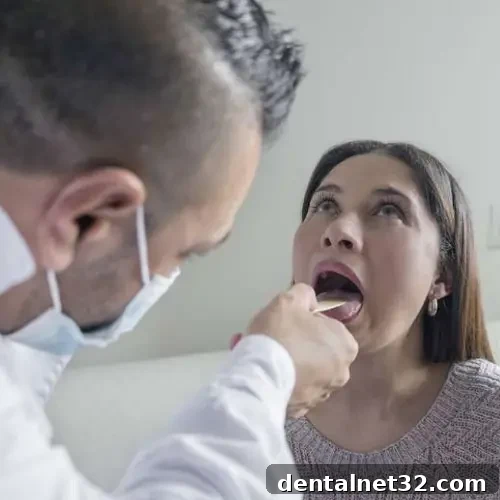
An oral cancer screening is a simple, painless, and quick procedure that your dentist can perform during a regular check-up. It typically involves two parts:
- Visual and Tactile Exam: Your dentist will carefully examine your entire oral cavity, including the lips, cheeks, gums, tongue (top, bottom, and sides), palate, and the back of your throat. They will look for any asymmetries, bumps, patches, or sores. They will also gently feel the tissues of your neck, jaw, and face to check for any unusual lumps or swollen lymph nodes.
- Advanced Screening Technology: Many dental offices, like Dr. Tchaboukian’s, now use advanced tools like the Identafi® or VELscope®. These devices use special lights to help dentists identify potentially cancerous or precancerous tissues that may not be visible under normal white light. This technology acts as a crucial second line of defense, enhancing the dentist’s ability to spot trouble early.
If your dentist finds a suspicious area, the next step is typically a biopsy. A small sample of tissue is removed and sent to a laboratory for analysis. This is the only way to get a definitive diagnosis. Catching cancer at Stage 1, as Lydia did, often means that treatment is less invasive, more successful, and has a much lower impact on a person’s quality of life.
Take Control of Your Health: A Final Word from Lydia
Lydia Valdez is now a passionate advocate for oral cancer awareness. Her journey from misdiagnosing a sore to becoming a cancer survivor has given her a powerful message to share. “I thought oral cancer could only be caused by smoking. Now I’m telling everyone they need to go to the dentist,” she says. “I know I’ll never miss another appointment!”
Her story is a testament to the fact that you don’t have to be a smoker or heavy drinker to be at risk. Oral cancer can affect anyone, regardless of age or lifestyle. The most powerful tool you have is awareness and proactive care. Don’t wait for a problem to become obvious or painful. Schedule your regular dental check-up and specifically ask for an oral cancer screening. It’s a few minutes that could add years to your life.