
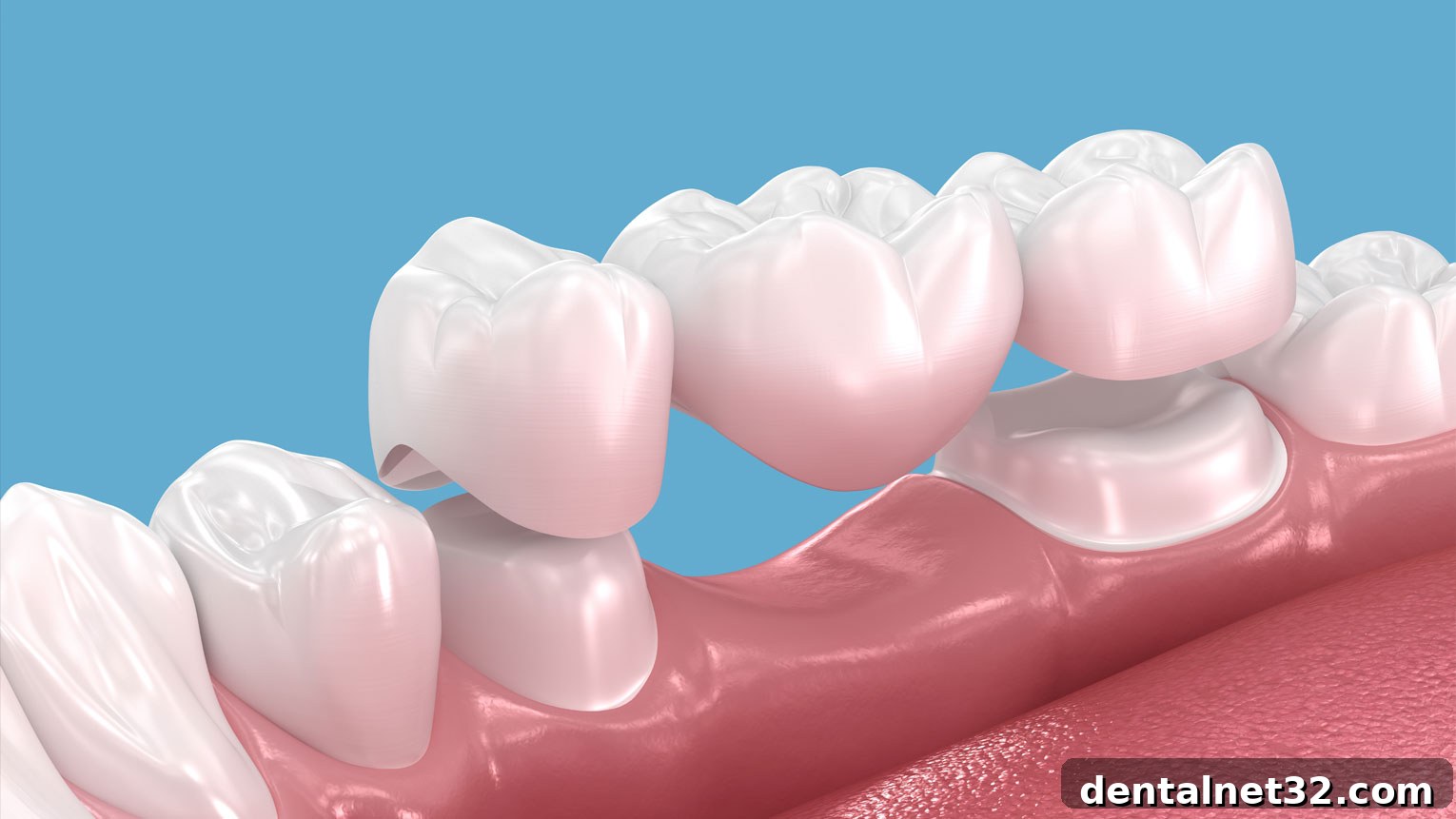
Damaged or missing teeth affect more than how your smile looks. They can make chewing uncomfortable, alter how adjacent teeth meet, and leave remaining tooth structure more prone to further harm. Dental crowns and bridges are two common restorative options used to address these problems, but they serve different purposes and are chosen based on the specific clinical situation.
A crown covers and protects an existing tooth, restoring its shape, strength, and appearance. A bridge replaces one or more missing teeth by spanning the gap with artificial teeth supported by adjacent teeth or implants. The right choice depends on the condition of your teeth and gums, the location of the issue, and your long-term oral health goals.
What Is a Dental Crown?
A dental crown is a custom-made restoration that fits over the visible portion of a natural tooth. Crowns restore form and function by rebuilding a tooth’s shape, protecting weakened enamel, and allowing you to bite and chew more comfortably. Dentists commonly recommend crowns for teeth that are cracked, heavily restored with large fillings, extensively worn, or have undergone root canal treatment. Crowns are also used to attach to dental implants when replacing a missing tooth.
What Is a Dental Bridge?
A dental bridge replaces one or more missing teeth by anchoring artificial teeth across the space. Traditional bridges use crowns placed on the natural teeth adjacent to the gap to support the replacement tooth or teeth. Some bridges are supported by dental implants rather than natural teeth. Replacing missing teeth with a bridge can help restore chewing efficiency, improve speech clarity, and return a natural appearance to the smile.
Common Problems a Crown May Address
A Cracked, Chipped, or Broken Tooth
When a tooth has significant structural damage, a filling or bonding may not provide enough protection. A crown encases the remaining tooth structure and helps distribute chewing forces more evenly. Before placing a crown, the dentist evaluates how deep a crack extends and whether the tooth can be restored predictably; in some cases, additional treatment or extraction may be necessary if the damage is too extensive.
A Tooth Weakened by a Large Filling
If a filling takes up much of a tooth, the remaining enamel and dentin can become fragile and more likely to fracture. A crown offers reinforcement when there isn’t enough healthy tooth structure to reliably support another filling, reducing the risk of future breakage and improving long-term function.
A Tooth Treated With Root Canal Therapy
Teeth that have undergone root canal treatment are often more brittle and can benefit from the protection of a crown, especially back teeth that endure significant chewing pressure. The crown covers and seals the tooth, helping prevent reinfection and restoring normal function. The final choice of restoration depends on how much healthy tooth remains and the tooth’s position in the mouth.
A Severely Worn or Misshapen Tooth
A crown can rebuild a tooth that has been worn down by grinding or that has an irregular shape due to wear or developmental differences. Before restoring the tooth, the underlying causes of wear—such as bruxism (teeth grinding) or an uneven bite—should be identified and managed to protect the restoration and adjacent teeth.
A Dental Implant That Needs a Restoration
Crowns are frequently used as the visible replacement tooth attached to a dental implant. Implant-supported crowns restore the look and function of a natural tooth when there is adequate bone and healthy gums to support the implant. A thorough examination and imaging help determine whether implant treatment is a viable option.
Common Problems a Bridge May Address
One or More Missing Teeth
Bridges close gaps left by missing teeth, which can improve chewing comfort and restore a complete appearance to the smile. Depending on the situation, alternatives may include a removable partial denture or implant-supported restorations. Your dentist will discuss the pros and cons of each approach based on your oral health and personal preferences.
Changes in Bite or Tooth Position
When a tooth is lost, neighboring teeth may slowly shift into the empty space, potentially changing your bite and making future dental work more complicated. Replacing a missing tooth with a bridge can help maintain proper tooth position and bite alignment. The timing and type of replacement depend on individual circumstances, including how quickly adjacent teeth are moving and the health of supporting structures.
Crown or Bridge: How Is the Choice Made?
In general, a crown repairs or protects an existing tooth while a bridge replaces one or more missing teeth. During an evaluation, the dentist will examine your teeth and gums, take necessary X-rays or scans, review your health history, and discuss your priorities and budget. Key factors influencing the recommendation include the condition of the tooth or teeth involved, the health of neighboring teeth, the amount of supporting bone and gum tissue, oral hygiene habits, cost considerations, and the expected maintenance of the restoration.
No restoration is permanent. Daily brushing, cleaning between the teeth, regular dental checkups, and avoiding habits that can damage restorations—such as chewing hard objects or persistent grinding—help extend their lifespan. Bridges require careful cleaning under and around the replacement tooth to prevent decay and gum disease beneath the prosthesis.
Restore Comfort and Function
If you have a broken, weakened, or missing tooth, a professional evaluation will clarify whether a crown, bridge, implant, or another option best meets your needs. A personalized treatment plan considers your oral health, functional needs, and cosmetic goals to restore comfort, function, and confidence in your smile.
Sources
- American Dental Association: Crowns
- American Dental Association: Bridges