
Are Your Old Silver Fillings a Ticking Time Bomb? The Hidden Dangers of Leaking Amalgam
Take a moment to look at the fillings in your mouth. If you have older, silver-colored fillings, known as amalgam fillings, you might be looking at a potential dental issue waiting to happen. For decades, amalgam was the go-to material for filling cavities due to its durability and low cost. However, these metallic restorations have a finite lifespan and can pose significant risks to your oral health as they age. Understanding the signs of a failing amalgam filling is the first step toward protecting your teeth from more extensive and costly damage.
An old amalgam filling that is beginning to fail can be a silent threat. You may notice subtle changes, like the edges corroding or a dark line appearing where the filling meets your tooth. These are not just cosmetic issues; they are warnings that the protective seal has been compromised. On average, a silver filling can last for about 12 years, but this can vary dramatically. Factors like teeth grinding (bruxism), a diet high in acidic or sugary foods, or simply the force of your bite can shorten this lifespan to as little as five years. When these fillings weaken, they can begin to leak, crack, or even fall out entirely, leaving your tooth vulnerable.
Identifying the Warning Signs of a Failing Amalgam Filling
It’s crucial to know what to look for when evaluating your old fillings. The breakdown of an amalgam filling isn’t always accompanied by pain, which is why visual cues and regular dental check-ups are so important. Here are the key indicators that your silver filling may need to be replaced:
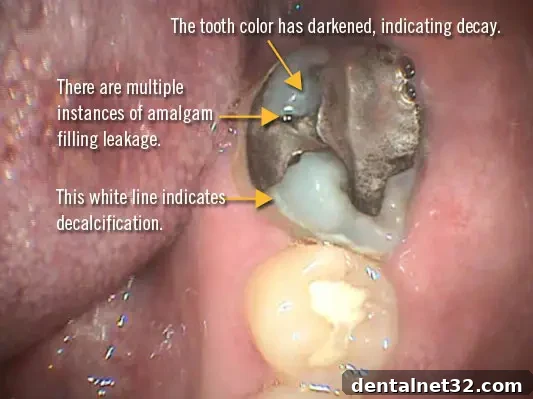
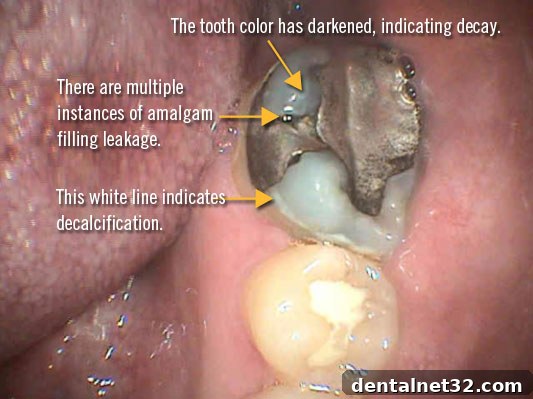
- Visible Gaps and Corrosion: Over time, amalgam fillings can contract and expand with temperature changes, creating microscopic gaps between the filling and the tooth. This allows bacteria and food particles to seep underneath. You might see the edges of the filling looking corroded or pulling away from the tooth enamel.
- Tooth Discoloration: One of the most telling signs is a change in the color of the tooth itself. As the metal in the amalgam filling corrodes, it can leach into the porous inner layers of your tooth (the dentin), causing a grayish or blackish hue. This discoloration is a strong indicator of internal decay spreading beneath the filling.
- Decalcification Lines: Look for a chalky white line along the margin of the filling. This is a sign of decalcification, a process where plaque acids have stripped essential minerals like calcium from the enamel. This weakens the tooth structure, making it more susceptible to fractures and further decay.
- Increased Sensitivity: Do you feel a sharp twinge of pain when you eat something hot, cold, or sweet? While tooth sensitivity can have many causes, a new or worsening sensitivity in a tooth with an old filling often points to leakage. When the seal is broken, external stimuli can reach the sensitive nerves inside your tooth.
- Pain or Discomfort: While many failing fillings are painless initially, pain is a definitive sign that something is wrong. You might feel a dull ache or sharp pain when you bite down. This could mean the decay has reached deep into the tooth, potentially affecting the nerve.
The Silent Progression of Decay Beneath a Filling
The primary danger of a failing filling is the hidden decay it can cause. Because the decay starts under the existing restoration, it is often invisible to the naked eye and can become extensive before it is discovered. This is a step-by-step look at how the damage unfolds:
First, the seal of the filling breaks down, a process known as micro-leakage. This creates an entry point for harmful bacteria. Once beneath the filling, these bacteria find a protected environment where they can thrive, feeding on trapped food particles and sugars. As they metabolize these sugars, they produce acids that eat away at the tooth structure from the inside out. Since the outer enamel may still appear intact, you may have no idea that a large cavity is forming within your tooth.
If this process is left unchecked, the decay will inevitably progress toward the center of the tooth, where the dental pulp—containing the nerve and blood vessels—is located. When the decay reaches the pulp, it can lead to a painful infection or abscess. At this stage, the pain can become intense and constant, and you will require more invasive treatment, such as a root canal, to save the tooth.
Treatment Options: Replacing Your Old Amalgam Fillings
If your dentist determines that your amalgam filling is failing, the goal is to remove the old material and any underlying decay, and then restore the tooth to its full function and strength. The faster you address the problem, the simpler and more affordable the treatment will be.
The replacement process begins with your dentist numbing the area to ensure your comfort. The old amalgam filling and all the decayed tooth structure are carefully removed using a drill. Once the tooth is clean, your dentist will assess the extent of the damage to determine the best way to restore it.
- New Filling (Composite Resin): If the cavity is relatively small and enough healthy tooth structure remains, the tooth can be restored with a new filling. Modern dentistry often favors tooth-colored composite resin fillings. These are bonded directly to the tooth, providing a strong seal and a more natural-looking appearance.
- Inlay or Onlay: For larger areas of decay where a simple filling isn’t sufficient but a full crown isn’t necessary, your dentist might recommend a porcelain inlay or onlay. These are custom-made restorations crafted in a dental lab and then bonded to your tooth, offering superior durability and aesthetics.
- Dental Crown: When a significant portion of the tooth has been compromised by decay or fracture, a dental crown is often the best solution. A crown, or “cap,” covers the entire visible portion of the tooth, providing comprehensive protection and restoring its original shape, size, and strength. In the case of the tooth pictured above, the extensive damage would almost certainly require a crown.
- Root Canal Therapy: If the decay has reached the tooth’s nerve, a root canal will be necessary to remove the infected pulp, clean the inner canals, and save the tooth from extraction. After a root canal, the tooth will almost always need a crown to protect it from fracturing.
Proactive Care: The Key to Avoiding Costly Procedures
Preventative dental care is always more effective and less expensive than reactive treatment. The hierarchy of dental costs serves as a powerful reminder of this principle. Preventing a cavity with good hygiene and dental sealants costs far less than a filling. A simple filling costs less than a dental crown. And a crown is significantly less expensive than a root canal and crown combination or, in the worst-case scenario, a tooth extraction followed by a dental implant.
Regular dental check-ups, typically every six months, are your best defense. During these appointments, your dentist can use visual examination and dental X-rays to detect problems with old fillings long before you experience any symptoms. By catching a leaking filling early, you can often replace it with a simple, new filling, thereby avoiding the cascade of more complex and costly treatments.
If you have old silver amalgam fillings, don’t wait for pain to be your signal to act. Schedule an appointment with your dentist for a thorough evaluation. A proactive approach not only protects your wallet but, more importantly, preserves the health and integrity of your natural teeth for years to come.