
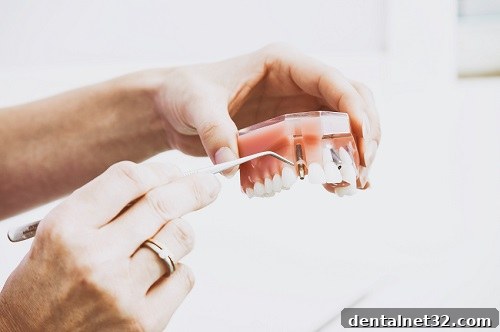
Losing teeth can significantly impact your daily life, affecting everything from your ability to eat your favorite foods to your confidence when you smile. If you’re dealing with missing teeth, require tooth extractions, or are facing challenges with severe tooth decay, modern dentures offer a reliable and aesthetically pleasing solution. They not only restore your ability to speak and chew with comfort but also provide a realistic prosthetic that enhances your smile’s appearance, helping you regain your self-assurance.
During consultations about tooth replacement options, our experienced restorative dentist often receives questions like, “What are dentures made of?” and “How are dentures made?” To provide clarity and deepen your understanding, we’ve created this comprehensive guide. We’ll explore the fascinating history of dentures, the advanced materials used today, and the meticulous process of creating a custom-fit smile.
A Journey Through Time: The History of Dentures
 The concept of false teeth, or dentures, is one of the oldest practices in dentistry. Archaeological evidence dates back to the 7th Century BC, where the Etruscans in ancient Italy crafted rudimentary dentures from a combination of human and animal teeth held together with gold bands. For centuries, this basic model persisted. Animal teeth (often from cattle or hippos) and human teeth (sometimes sourced from battlefields or graverobbers) were the primary materials used to create replacements up through the 1800s. These early prosthetics were often uncomfortable and prone to rapid decay and breakage, serving as a temporary fix at best.
A significant breakthrough occurred in 1770 with the invention of porcelain dentures by a French pharmacist, Alexis Duchâteau. This marked the beginning of a more durable and hygienic solution. By 1792, these porcelain teeth were commercially available, offering a more permanent option to the public. Throughout the 19th and early 20th centuries, porcelain became the standard for artificial teeth. The base plates that held these teeth initially were crafted from expensive materials like gold or ivory. Later, the invention of Vulcanite—a type of hardened rubber developed by Charles Goodyear—made denture bases more affordable and accessible to the general population.
The 20th century ushered in an era of revolutionary progress in material science. Innovations in plastics and polymers led to the widespread adoption of acrylic resin for both the denture teeth and the base plate. This material offered a lightweight, durable, and more customizable alternative to its predecessors. It’s also worth noting a popular historical myth: despite the enduring legend, George Washington did not have wooden teeth. His dentures were sophisticated for their time, constructed from a mix of carved hippopotamus ivory, gold, lead, and both human and animal teeth.
What Modern Dentures Are Made Of: Materials and Technology
Today’s dentures have evolved significantly from their historical counterparts, focusing on comfort, durability, and a natural appearance. The primary material used for most modern dentures is a highly advanced, cross-linked acrylic resin. This specialized plastic offers an ideal combination of properties that make it perfect for dental prosthetics.
Acrylic Resin: The Industry Standard
Acrylic resin is favored for several key reasons. It is incredibly strong yet lightweight, ensuring the denture is comfortable enough for all-day wear. Its adaptability allows dental technicians to mold it precisely to the impressions of a patient’s gums, resulting in a secure and comfortable fit with minimal need for adjustments. Unlike the hardness of porcelain, acrylic is gentler on any remaining natural teeth, making it an excellent choice for partial dentures and dental bridges. Furthermore, acrylic resin is highly cost-effective, making high-quality dentures accessible to a wider range of patients. The acrylic used for the denture base (the “gums”) can be tinted with remarkable accuracy to match the patient’s natural gum color, making the prosthetic virtually unnoticeable.
Porcelain: For Superior Aesthetics
While acrylic resin is the most common material, porcelain is still used, particularly for full dentures where no natural teeth remain. Porcelain is a hard ceramic material celebrated for its exceptional durability and lifelike appearance. Its translucent quality closely mimics the look of natural tooth enamel, and it is highly resistant to staining from coffee, tea, or tobacco. Wearers often find that the weight and feel of porcelain teeth make it easier to adapt to chewing. However, porcelain is heavier and more brittle than acrylic, meaning it can chip or crack if dropped. It is also more abrasive and can cause wear on natural teeth, which is why it’s typically reserved for full denture sets. Due to its higher cost and specific application, it is used less frequently than acrylic.
Denture Frameworks: The Supporting Structure
For partial dentures, a sturdy framework is needed to provide support and stability. These frameworks are often made from a rigid, durable cobalt-chrome metal alloy. This metal is incredibly strong, allowing the framework to be very thin and less intrusive in the mouth. It also features clasps that securely grip onto remaining natural teeth. For patients seeking a metal-free option, flexible frameworks made from materials like nylon (e.g., Valplast) are available. These flexible partials are lightweight, comfortable, and have gum-colored clasps that are far less visible than metal ones.
The Meticulous Process: How Are Dentures Made?
Creating a set of dentures is a blend of science and artistry that involves several precise steps to ensure a perfect fit and a natural look. The process begins after your dentist determines that dentures are the best solution for your needs.
Step 1: Taking Impressions
The first and most critical step is for your dentist to take highly accurate impressions of your upper and lower arches. This is typically done using a soft, putty-like material (alginate) or dental wax placed in trays that fit over your gums. These impressions create a detailed mold of your mouth’s unique topography, which serves as the blueprint for your new dentures.
Step 2: Crafting the Models and Bite Registration
The impressions are sent to a specialized dental laboratory. There, a technician pours plaster into the molds to create an exact stone model of your mouth. This model is then placed on a mechanical device called an articulator, which simulates the movements of your jaw. This allows the technician to establish the correct relationship between your upper and lower jaw (the bite) and begin setting the artificial teeth in wax.
Step 3: The Wax Try-In
Using the stone models, the technician carefully places the chosen teeth (selected for shade and shape to match your natural look) into a wax base. This wax mock-up is sent back to your dentist’s office for a “try-in” appointment. During this visit, you will wear the wax denture, and your dentist will meticulously check the fit, comfort, bite, and aesthetics. This is your opportunity to see how the final product will look and feel, and any necessary adjustments to tooth position or alignment can be made easily at this stage.
Step 4: Final Processing
Once you and your dentist approve the wax try-in, it goes back to the lab for final processing. The wax denture is placed in a special flask, and more plaster is poured around it to create a final mold. The flask is then heated, causing the wax to melt and drain away, leaving the artificial teeth perfectly suspended within the plaster mold. This process is known as the “lost wax technique.”
Step 5: Injecting and Curing the Acrylic
After the wax is removed and the mold is clean, the technician injects liquid acrylic resin into the empty space where the wax used to be. The flask is then placed under high pressure and heat to cure the acrylic. This process transforms the liquid resin into a hard, dense, and durable solid base that securely holds the teeth.
Step 6: Finishing, Polishing, and Fitting
Once cured, the plaster mold is carefully broken away to reveal the finished denture. A skilled technician then trims any excess acrylic, grinds down any rough spots, and polishes the entire surface to a smooth, high-gloss finish. This ensures the denture feels comfortable against your gums and tongue and resists plaque buildup. The completed denture is then returned to your dentist for a final fitting, where any minor adjustments are made to guarantee optimal comfort and function.
Contact Us to Schedule Your Denture Consultation
If you are struggling with missing or severely damaged teeth, you don’t have to compromise on your quality of life. Modern restorative dentistry has made it possible for dentures to fit better, look more natural, and last longer than ever before. Reclaim your ability to eat, speak, and smile with total confidence.
We have had the privilege of helping countless patients in Cary and Holly Springs by designing and fitting them with comfortable, attractive dentures and partials. Let us help you restore your comfort and confidence. Schedule a consultation with our dedicated team today by filling out the form below or by calling our Cary office at 919-467-2203 or our Holly Springs office at 919-600-6262.