
Dental Implants: Your Ultimate Guide to a Permanent Tooth Replacement
A gap in your smile from a missing tooth is more than just a cosmetic concern. It’s the start of a chain reaction that can affect your entire oral health. Missing teeth can lead to a host of complications, including shifting adjacent teeth, an increased risk of gum disease, and the gradual deterioration of your jawbone, a process known as bone resorption. Addressing a missing tooth promptly is crucial to prevent these long-term problems. Dental implants offer a permanent, stable, and natural-looking solution to restore your smile and protect your oral health.
This comprehensive guide will explore the purpose, benefits, cost, and what you can expect from the dental implant procedure, providing you with the information you need to make an informed decision about your dental health.
What Are Dental Implants? A Closer Look at the Gold Standard
Whether you’ve lost a single tooth due to an injury, multiple teeth from decay, or an entire arch of teeth, dental implants provide a reliable and long-lasting solution. But what exactly are they?
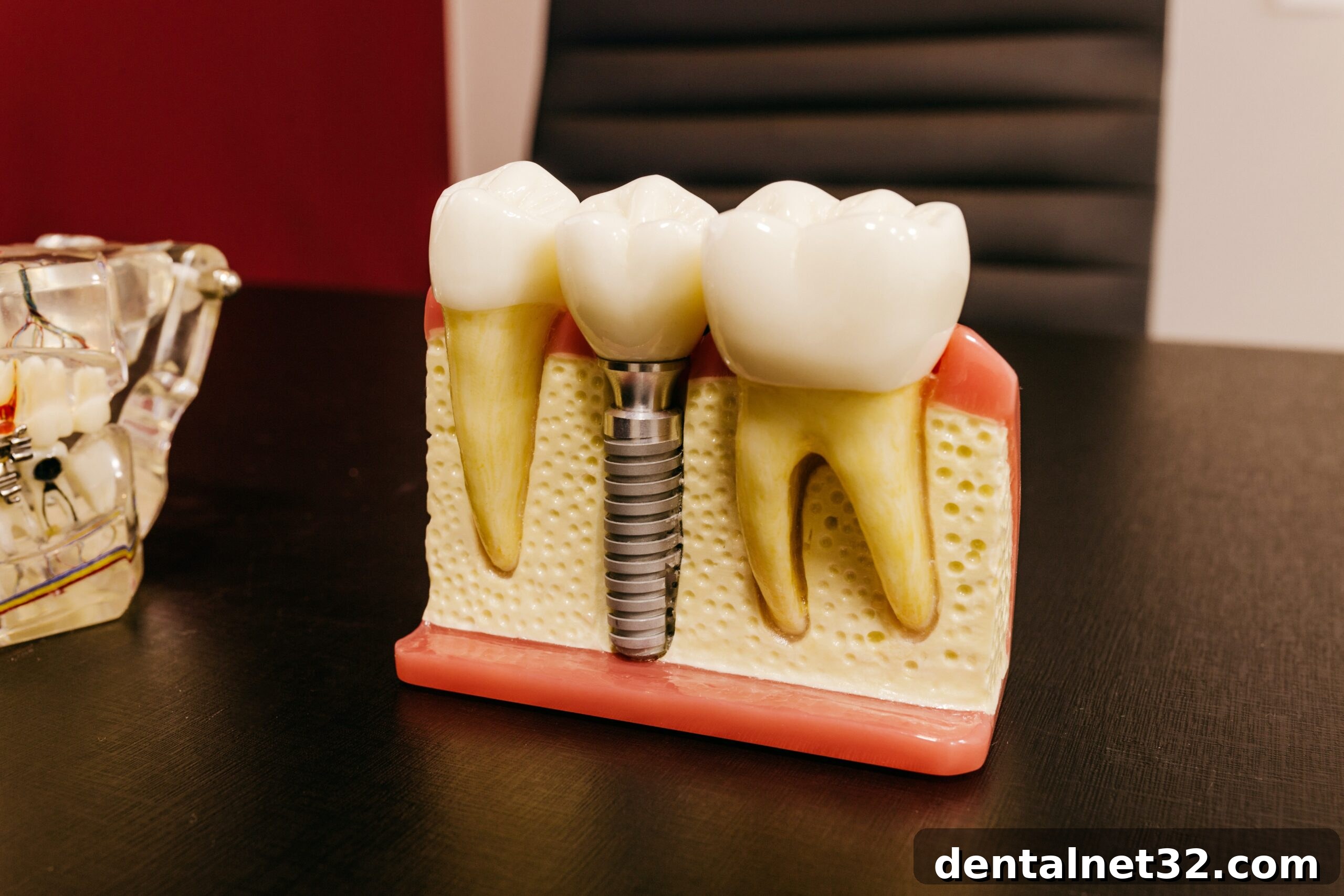
A dental implant is a small, screw-like post, typically made from biocompatible titanium, that is surgically placed into the jawbone. Its primary function is to act as an artificial tooth root, providing a strong and permanent foundation. Once the implant has fully integrated with the bone—a natural process called osseointegration—it becomes a secure anchor for attaching a custom-made dental restoration. This restoration could be a single crown, a dental bridge to replace several teeth, or a full denture for an entire arch.
- For a single missing tooth: One implant is placed and topped with a custom dental crown that is meticulously crafted to match the color, shape, and size of your natural teeth.
- For multiple missing teeth: An implant-supported bridge can be used. This involves placing two or more implants to anchor a bridge, eliminating the need to grind down healthy adjacent teeth as required by traditional bridges.
- For a full arch of missing teeth: As few as four to six strategically placed implants can support a full, non-removable denture. This method, often called “All-on-4,” offers incredible stability and function compared to traditional removable dentures.
The Dental Implant Procedure: A Step-by-Step Journey to a New Smile
The journey to receiving a dental implant is a multi-stage process that requires careful planning and healing time. Understanding each step can help demystify the procedure and set clear expectations.
Step 1: Initial Consultation and Treatment Planning
Your journey begins with a thorough consultation. During this visit, your dentist will perform a comprehensive dental exam, which includes taking X-rays and often a 3D CBCT scan. This detailed imaging allows the dentist to assess the health and density of your jawbone and map out the precise placement for the implant. Your medical history will be reviewed, and a personalized treatment plan will be created just for you.
Step 2: Preparatory Procedures (If Necessary)
Some patients may require preparatory work before the implant can be placed. If the tooth is still in place, it will need to be extracted. More importantly, if you’ve been missing a tooth for a while, your jawbone may have lost density. In such cases, a bone graft may be necessary to create a solid foundation for the implant. This procedure involves adding bone material to the jaw to stimulate new bone growth.
Step 3: Implant Placement Surgery
The implant placement is a minor surgical procedure performed in the dental office. The area is numbed with local anesthesia to ensure your comfort. Your dentist or surgeon will make a small incision in the gum to expose the bone, then carefully drill a pilot hole and place the titanium implant post into the jawbone. The gum tissue is then closed over the implant.
Step 4: Osseointegration and Healing
This is the most critical phase. Over the next three to six months, the implant will naturally fuse with your jawbone through osseointegration. This biological process creates the incredibly strong and stable bond that makes dental implants so successful. During this time, you may be fitted with a temporary tooth replacement.
Step 5: Abutment Placement and Final Restoration
Once healing is complete, you’ll return for a minor procedure to place the abutment—a connector piece that links the implant to the final crown. After your gums have healed around the abutment for a couple of weeks, impressions of your mouth will be taken to custom-fabricate your final crown, bridge, or denture. In the final step, this beautiful, life-like restoration is securely attached to the abutment, completing your new smile.
The Unmatched Benefits of Choosing Dental Implants
When considering tooth replacement options, dental implants stand out due to their numerous advantages over traditional restorations like dentures or bridges.
1. Unparalleled Durability and Longevity
Because an implant is securely fused to your jawbone, it provides a level of stability that other restorations simply cannot match. Unlike removable dentures, implants will not shift or click when you talk, eat, or laugh. This allows you to enjoy all your favorite foods with confidence. With proper care, dental implants are designed to last a lifetime, making them a truly permanent solution. While the implant post is permanent, the attached crown may eventually need replacement after 15-20 years due to normal wear and tear.
2. Preserves Jawbone and Facial Structure
When you lose a tooth, the underlying jawbone begins to shrink from lack of stimulation. This bone loss can alter your facial structure, leading to a sunken or aged appearance. A dental implant is the only tooth replacement option that mimics a natural tooth root, stimulating the jawbone and preventing bone loss. This helps maintain your natural facial contours.
3. Protects Healthy Adjacent Teeth
A traditional dental bridge requires the neighboring healthy teeth to be filed down to support the restoration. This permanently alters healthy tooth structure. Dental implants are standalone solutions that do not rely on adjacent teeth for support, thus preserving the integrity of your natural teeth.
4. Improved Oral Health and Hygiene
Implants eliminate the gaps where harmful bacteria can accumulate, reducing the risk of gum disease. Furthermore, they are cared for just like natural teeth—with simple brushing, flossing, and regular dental checkups. There are no messy adhesives or special cleaning routines required, making them a convenient and hygienic choice.
5. Enhanced Comfort and Natural Feel
Dental implants become a part of you, so they feel completely natural. They eliminate the discomfort and irritation often associated with removable dentures, allowing you to speak, eat, and live without thinking about your teeth.
6. A Cost-Effective Long-Term Investment
While the initial cost of a dental implant may be higher than other options, its longevity makes it a highly cost-effective solution. Bridges and dentures often require repairs and replacements every 5 to 15 years, leading to ongoing costs. Implants are a one-time investment in a permanent solution, saving you money and time in the long run.
Understanding the Cost of Dental Implants
The total investment for dental implants can vary significantly based on several key factors, including your geographic location, the number of implants needed, and the type of final restoration (crown, bridge, or denture). The average cost for a single-tooth implant, including the post, abutment, and crown, typically ranges from $3,000 to $4,500. Full mouth restorations can range from $60,000 to $90,000.
If preparatory procedures like tooth extractions or bone grafts are required, these will add to the overall cost. It is recommended to check with your dental insurance provider to understand your coverage, as some plans may cover a portion of the procedure. For further financial assistance, many dental offices offer flexible payment plans or work with third-party financing companies like CareCredit.
Restore Your Smile and Health with Dental Implants
Don’t let a missing tooth compromise your smile, confidence, or oral health. Dental implants offer a state-of-the-art solution that looks, feels, and functions just like natural teeth. At Locust Family Dentistry, we specialize in restorative dental services, including dental implants in Locust, NC, to help you achieve a healthy, complete, and brilliant smile that lasts a lifetime.
Investing in a dental implant is an investment in your long-term health and well-being. If you’re ready to explore how this revolutionary treatment can transform your smile, the first step is a consultation.
Book an appointment today to discover if dental implants are the right solution for you!