
Mastering Braces Hygiene: A Comprehensive Guide to a Perfect, Healthy Smile
Embarking on the journey to a straighter smile with braces is a significant and exciting milestone. Whether you’re correcting crowded teeth, closing gaps, or aligning your bite, the promise of a perfectly straight smile at the end of the treatment is a powerful motivator. However, achieving that beautiful result involves more than just the orthodontist’s adjustments. The ultimate success of your orthodontic treatment hinges on a crucial partnership between you and your dental care team. Straightening your teeth is only half the battle; keeping them healthy, white, and strong throughout the process is the other, equally important half.
The intricate network of brackets and wires, while expertly designed to move your teeth, unfortunately creates numerous new hiding spots for food particles and plaque. If not managed diligently, this can lead to a host of preventable dental issues, including cavities, gum inflammation, and the dreaded white spots (decalcification) that can permanently mar your teeth. This guide provides a detailed, step-by-step roadmap to ensure that when your braces come off, you reveal a smile that is not only beautifully aligned but also radiantly healthy.
Why Braces Demand a Higher Level of Oral Care
Before diving into the “how,” it’s essential to understand “why” your oral hygiene routine needs an upgrade with braces. Your mouth is a complex ecosystem, and the introduction of orthodontic appliances changes the landscape significantly. Brackets, wires, and bands create ledges and crevices where plaque—a sticky, colorless film of bacteria—can thrive. When you eat or drink, especially items high in sugar and starch, the bacteria in plaque produce acids that attack your tooth enamel.
The Primary Risks of Poor Hygiene with Braces
- Decalcification (White Spots): This is perhaps the most common aesthetic concern. When plaque sits on a tooth surface for too long, the acids it produces start to leach essential minerals like calcium and phosphate from the enamel. This process, called decalcification, leaves behind chalky, white spots or lesions. These spots are often most noticeable around the areas where the brackets were once attached and are, in many cases, permanent. They represent the very first stage of a cavity.
- Gingivitis (Gum Inflammation): Plaque doesn’t just harm teeth; it also irritates the gums. When plaque accumulates along the gumline, it can cause gingivitis, characterized by red, swollen, and bleeding gums. If left untreated, gingivitis can progress to more severe forms of gum disease, potentially impacting the bone that supports your teeth.
- Dental Caries (Cavities): If decalcification continues, the enamel will eventually break down completely, forming a cavity. Treating a cavity is more complicated when braces are in the way, sometimes requiring the temporary removal of a wire or bracket to properly fill the tooth.
The good news is that all of these issues are entirely preventable with a consistent and thorough oral care routine. Your commitment to hygiene is the single most important factor in achieving a flawless result.
Your Essential Daily Braces Care Toolkit
Success starts with having the right tools for the job. Standard brushing and flossing techniques are simply not effective enough to navigate the obstacle course of braces. Here’s what your daily arsenal should include:
1. The Right Toothbrush
A soft-bristled toothbrush is crucial to avoid damaging your braces or irritating your gums. An electric toothbrush can be particularly effective, as many models come with specialized orthodontic brush heads and built-in timers to ensure you brush for the recommended two minutes. If using a manual brush, consider an orthodontic-cut brush, which has shorter bristles in the middle and longer ones on the sides to clean the tooth surface and around the brackets simultaneously.
2. Fluoride Toothpaste and Rinses
Fluoride is your enamel’s best friend. It helps to remineralize areas that have been attacked by acids and makes your teeth more resistant to future decay. Use a fluoride toothpaste every time you brush. In some cases, your orthodontist might recommend a supplemental fluoride product, such as a prescription-strength toothpaste like MI Paste Plus or a daily fluoride rinse, to provide extra protection against white spots and cavities.
3. Specialized Flossing Tools
Flossing is non-negotiable, but it’s also the most challenging part of braces care. Fortunately, several tools make it much easier:
- Floss Threader: A floss threader is a small, flexible plastic loop. You thread your regular floss through the loop and then guide the stiff end of the threader underneath your archwire, allowing you to floss between the teeth as you normally would.
- Orthodontic Floss: Products like Superfloss are designed with three sections: a stiff end for easy threading under wires, a spongy section for cleaning around brackets, and a regular floss section for the tooth surfaces.
- Water Flosser (e.g., Waterpik): A water flosser is an excellent supplement to traditional flossing. It shoots a targeted stream of water to dislodge food particles from between teeth and around brackets, while also massaging the gums. While it shouldn’t completely replace string floss, it is incredibly effective at removing debris that brushing and flossing might miss.
4. Interdental Brushes
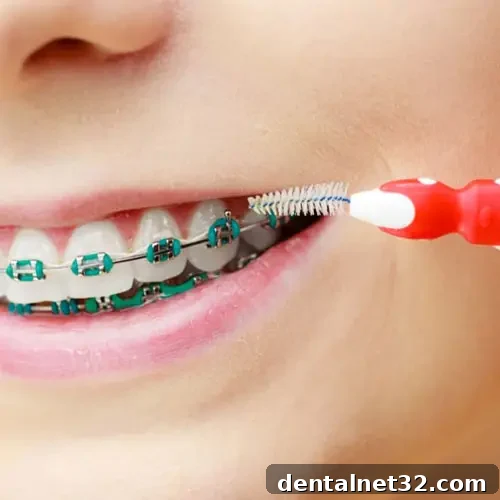
Also known as proxy brushes or “go-betweens,” these tiny brushes are perfect for cleaning the small spaces between your brackets and under the archwire. They are highly effective at removing plaque and food debris from hard-to-reach areas.
The Step-by-Step Guide to Brushing and Flossing with Braces
Consistency is key. Aim to brush after every meal and floss at least once or twice a day. Here is the most effective technique:
How to Brush Your Teeth with Braces
- Rinse First: Before you begin, rinse your mouth vigorously with water to dislodge any loose food particles.
- Brush Above the Brackets: Place your toothbrush on the gumline at a 45-degree angle, pointing down towards the brackets. Gently brush along the gumline and the top portion of each bracket.
- Brush Below the Brackets: Reposition your brush to angle up towards the brackets from below. Clean the bottom of each bracket and the lower part of each tooth.
- Clean the Brackets: With the brush head flat, gently brush the front surface of the brackets themselves to remove any lingering plaque.
- Brush All Other Surfaces: Don’t forget to brush the chewing surfaces and the inside surfaces of all your teeth, just as you would without braces.
- Take Your Time: The entire process should take at least two full minutes. Pay attention to each tooth individually to ensure a thorough clean.
How to Floss Your Teeth with Braces
- Prepare Your Floss: Take an 18-inch piece of floss. Use a floss threader or the stiff end of orthodontic floss to carefully guide it under the main archwire.
- Floss Between the Teeth: Once the floss is between the teeth, gently slide it up and down the surface of each tooth, making a “C” shape around the tooth and dipping slightly below the gumline.
- Be Thorough: Remove the floss, re-thread it under the wire for the next set of teeth, and repeat the process for every tooth in your mouth. This takes patience but is vital for preventing cavities and gum disease between the teeth.
The Impact of Diet on Your Orthodontic Health
What you eat and drink has a direct impact on the health of your teeth and the integrity of your braces.
Foods and Drinks to Limit or Avoid
- Sugary and Acidic Drinks: Sodas, sports drinks, fruit juices, and energy drinks are particularly damaging. The combination of sugar and acid creates a perfect storm for enamel erosion and white spot formation. If you do have one, rinse your mouth with water immediately afterward.
- Hard Foods: Avoid hard candies, nuts, popcorn kernels, and chewing on ice. These can easily break a bracket or bend a wire, leading to an emergency appointment.
- Sticky Foods: Caramel, taffy, and chewing gum can get stuck in your braces and are very difficult to clean out. They can also pull brackets off your teeth.
- Tough or Chewy Foods: Hard rolls, bagels, and tough meats can be hard on your appliance. Cut them into small, bite-sized pieces.
Always cut hard fruits and vegetables like apples and carrots into smaller pieces instead of biting directly into them.
The Crucial Role of Professional Dental Cleanings
Even with the most diligent at-home care, plaque can harden into tartar (calculus), which can only be removed by a dental professional. That’s why regular professional cleanings are more important than ever when you have braces.
Most dentists and orthodontists recommend that patients with braces get a professional cleaning every four months instead of the usual six. This increased frequency helps manage the higher risk of plaque and tartar buildup. For maximum effectiveness, you can schedule your dental cleaning on the same day as your orthodontic adjustment. This allows the orthodontist to remove your archwire, giving the hygienist much better access to clean thoroughly around the brackets and between the teeth. Afterward, the orthodontist can place a new wire, ensuring your teeth are as clean as possible before continuing their movement.
As orthodontist Dr. Mayuri Patel notes, “Oral hygiene is a pivotal part of success for orthodontic treatment. Patients who consume a lot of soda and sports drinks can have white spots occur around the braces due to the breakdown of enamel. Our goal is to emphasize brushing and flossing to prevent these permanent marks and ensure a healthy outcome.”
By following these guidelines, you are investing in the long-term health and beauty of your smile. The effort you put into your oral hygiene today will pay off tenfold when your braces are removed, revealing a straight, stunning, and perfectly healthy smile that will last a lifetime.
Reviewed by: Mayuri Patel, DMD, MHS
Reviewed by: Cindy Roark, DMD