
A routine visit to the dentist often involves more than just a cleaning and a check-up. You’ve likely been in the chair when the dental hygienist or dentist mentions it’s time for X-rays. While it’s a common procedure, many patients wonder why these images are so crucial for maintaining a healthy smile. Dental X-rays are a fundamental diagnostic tool that allows your dental team to see what the naked eye cannot, providing a comprehensive view of your oral health.
Whether you’re a seasoned patient familiar with the process or preparing for your first set of dental radiographs, understanding their purpose can empower you to take a more active role in your dental care. At Sninski & Schmitt Family Dentistry, we believe an informed patient is a healthy patient. This guide will explore everything you need to know about dental X-rays, from the different types and their purposes to their safety and frequency, giving you a clear picture of this essential procedure.
What Exactly is a Dental X-Ray?
A dental X-ray, also known as a radiograph, is a two-dimensional image that reveals the interior of your teeth and the condition of the bones in your mouth. By using a controlled, low level of radiation, these images capture a detailed picture of your tooth structure, roots, and jawbone. Think of it as giving your dentist a superpower—the ability to see through your gums and enamel to detect potential issues long before they become visible or cause discomfort.
This advanced imaging is indispensable for identifying a wide range of dental problems that are otherwise hidden from view. A simple visual examination can miss a significant number of oral health threats that can be caught early with a radiograph.
Why Are Dental X-Rays a Necessary Part of Your Check-Up?
Without X-rays, a dentist’s understanding of your oral health is incomplete. These images are vital for a comprehensive diagnosis and are used to identify and address numerous conditions before they escalate into more serious, painful, and expensive problems. Here are some of the key issues that dental X-rays help uncover:
- Hidden Cavities and Tooth Decay: X-rays are exceptionally effective at spotting cavities that form between teeth (interproximal cavities) or beneath existing fillings, crowns, or other dental restorations.
- Impacted Teeth: They clearly show the position of teeth that have not fully erupted, such as wisdom teeth, allowing dentists to plan for their potential removal if they pose a risk to adjacent teeth or jaw alignment.
- Bone Loss: Periodontal (gum) disease can lead to the loss of bone that supports the teeth. X-rays can quantify the extent of this bone loss, which is crucial for staging the disease and planning treatment.
- Infections and Abscesses: An X-ray can reveal infections at the root of a tooth or between the gum and a tooth, known as an abscess. Early detection is critical to prevent the infection from spreading.
- Cysts and Tumors: Although less common, X-rays can help identify abnormal growths like cysts or tumors within the jawbone.
- Developmental Abnormalities: For children and teenagers, radiographs are used to monitor the development of permanent teeth and ensure everything is growing as it should.
- Root and Jaw Health: They provide a clear view of the tooth roots and the health of the surrounding jawbone, which is essential for procedures like root canals, dental implants, and orthodontics.
Ultimately, skipping routine dental X-rays means potentially allowing serious issues like hidden tooth decay, infections, or bone loss to go undiagnosed. This can compromise not only your oral health but also your overall well-being.
Exploring the Different Types of Dental X-Rays
Not all dental X-rays are the same. Your dentist will choose a specific type based on the area they need to examine and the information they are seeking. They are broadly categorized into two groups: intraoral (meaning the film or sensor is inside the mouth) and extraoral (the film is outside the mouth).
Common Intraoral X-Rays
These are the most frequently used X-rays in dentistry, providing a high level of detail.
- Bitewing X-Rays: For this X-ray, you bite down on a small wing-shaped device. It captures a view of both the upper and lower teeth in one specific area of the mouth. Bitewings are excellent for showing how the crowns of your teeth match up and are the primary tool for detecting cavities between the teeth.
- Periapical X-Rays: This type shows the entire tooth, from the crown (the visible part) all the way to the tip of the root and the supporting bone. A periapical X-ray is used to diagnose issues with a specific tooth, such as a suspected root infection, abscess, or problems with the bone structure around the tooth.
- Occlusal X-Rays: Larger than other X-rays, the occlusal view captures an entire arch of teeth in either the upper or lower jaw. It’s useful for tracking tooth development and placement in children and can reveal anatomical abnormalities in the floor of the mouth or the palate.
Common Extraoral X-Rays
These are used to look at the bigger picture, focusing on the jaw and skull.
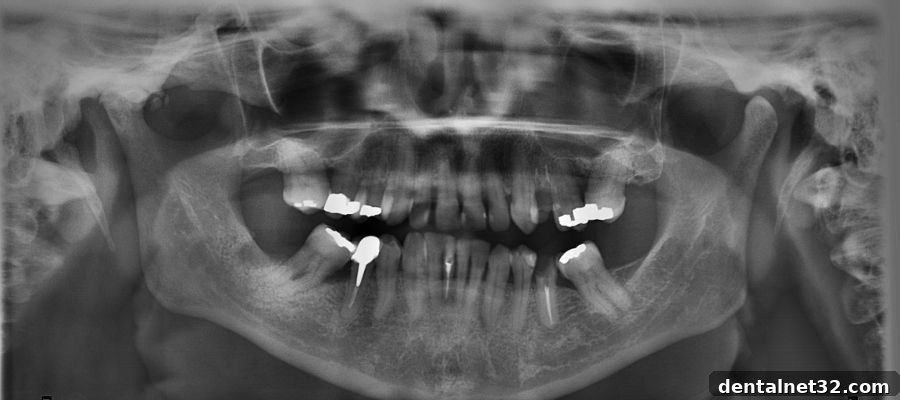
- Panoramic X-Rays: For this image, a machine rotates around your head to create a single, comprehensive view of your entire mouth. It shows all the teeth on both jaws, the TMJ (temporomandibular joints), and the sinus areas. Panoramic X-rays are invaluable for checking for impacted wisdom teeth, planning for dental implants, and diagnosing jaw problems.
Digital vs. Traditional Film X-Rays: The Modern Advantage
While traditional film X-rays are still used, most modern dental practices, including Sninski & Schmitt Family Dentistry, have transitioned to digital X-rays. This technology offers significant benefits for both the patient and the dentist.
Digital X-rays use an electronic sensor to capture images and send them directly to a computer. This process is instantaneous, eliminating the need to wait for film to develop. Your dentist can view the images immediately, zoom in on specific areas of concern, and adjust the contrast for a more accurate diagnosis. Most importantly, digital radiography reduces radiation exposure by up to 90% compared to traditional film, making it an even safer option. It’s also more environmentally friendly, as it requires no harsh chemicals for developing.
How Often Should You Get Dental X-Rays?
The frequency of dental X-rays is not one-size-fits-all. It depends on your age, current oral health, and risk factors for dental disease. The U.S. Food and Drug Administration (FDA) and the American Dental Association (ADA) provide general guidelines:
- Adults with Good Oral Health: If you have no visible cavities and are not at high risk for decay, a set of posterior bitewing X-rays every 2-3 years is typically sufficient.
- Adults at Higher Risk: For those with a history of frequent cavities, existing gum disease, or extensive dental work, bitewings may be recommended every 6-18 months to monitor their condition closely.
- Children and Adolescents: Because their teeth and jaws are still developing, children may need X-rays more often. A child with no visible decay might need them every 1-2 years, while a child at higher risk may need them every 6-12 months.
Your dentist will assess your individual needs to create a personalized X-ray schedule that ensures optimal care.
Addressing Safety: Are Dental X-Rays Safe?
One of the most common questions from patients is about radiation exposure. It’s natural to be cautious, but it’s important to understand that the amount of radiation used in modern dental X-rays is extremely low. In fact, a set of four bitewing digital X-rays exposes you to about the same amount of radiation you’d get from a short airplane flight or a day spent outdoors in the sun.
To ensure maximum safety, dental offices follow strict protocols. You will be covered with a leaded apron to protect your torso and, in many cases, a thyroid collar to protect the thyroid gland. These protective shields prevent any unnecessary radiation exposure to your vital organs, making the procedure exceptionally safe for patients of all ages.
Dental X-Rays During Pregnancy
Many expectant mothers worry about the safety of dental procedures. According to both the American Dental Association and the American College of Obstetricians and Gynecologists, dental X-rays are considered safe during pregnancy. With the use of proper shielding, the radiation exposure to the abdomen is negligible. Maintaining good oral health is vital during pregnancy, as untreated dental infections can pose risks to both mother and baby. It’s always best to inform your dentist that you are pregnant and discuss any concerns you may have.
What to Expect After Your Dental X-Ray
Once the images are captured, your dentist will review them carefully to look for any signs of abnormality. If the X-rays are clear and show no issues, you can continue with your regular oral hygiene routine until your next scheduled check-up. If a problem like a cavity, infection, or bone loss is detected, your dentist will discuss the findings with you and recommend a personalized treatment plan. This proactive approach allows you to address issues early, preserving your teeth and preventing more complex procedures down the road.
Your Partner in Comprehensive Dental Care
If you’re seeking a new family dentist who prioritizes patient education and state-of-the-art technology, Sninski & Schmitt Family Dentistry is ready to care for your entire family’s dental needs. From routine cleanings and diagnostic X-rays to advanced cosmetic dentistry and restorative dentistry, we are your partners in achieving and maintaining a healthy smile. We are also here to help with unexpected dental emergencies. Contact our Holly Springs dentist office at (919)-600-6262 or our Cary dentist office at (919) 467-2203 to get started. You can also use our online form to schedule an appointment. We accept a wide range of insurance plans and are always welcoming new patients. We look forward to meeting you!