
The Unseen Dangers of Missing Teeth: A Complete Guide to Restoring Your Smile
A confident, healthy smile is more than just an aesthetic asset; it’s a cornerstone of our overall well-being. However, with a growing and aging global population, the challenge of tooth loss is becoming increasingly common. While a gap in your smile might seem like a simple cosmetic issue, the consequences run much deeper, impacting everything from your facial structure to your nutritional health. Fortunately, incredible advancements in modern dentistry, particularly in implant technology, now provide predictable, long-lasting solutions for even the most complex cases of tooth loss. This guide will explore the surprising ways missing teeth can affect your health and why dental implants have become the gold standard for saving your smile and preserving your health.
Beyond the Gap: The Hidden Consequences of Tooth Loss
The most immediate effect of losing a tooth is the visible gap it leaves behind. But beneath the surface of the gums, a silent and more damaging process begins almost immediately. Your teeth are not just tools for chewing; they play an integral, active role in maintaining the health and structure of your jawbone. Understanding this relationship is key to appreciating the full impact of tooth loss.
The Critical Role of Jawbone Stimulation
Your jawbone, specifically the alveolar bone that anchors your teeth, needs constant stimulation to maintain its density and form. Think of it like a muscle that needs regular exercise to stay strong. The everyday forces of chewing and biting travel down the root of each tooth and stimulate the surrounding bone, signaling the body to continuously regenerate and fortify it. When a tooth is lost, that vital stimulation ceases. Without its “job” to support a tooth, the body begins to resorb the bone material in that area, breaking it down and redistributing its minerals elsewhere. This process of bone loss, or atrophy, can lead to a reduction of up to 25% in bone width within the first year alone, with continued deterioration in bone height and density over time.
The Domino Effect: How One Missing Tooth Affects All the Others
The problem rarely stays confined to the site of the missing tooth. The oral environment is a finely balanced system, and removing one component can trigger a cascade of negative effects throughout the mouth. This “domino effect” can lead to significant and complex dental problems.
- Teeth Shifting and Tilting: Nature abhors a vacuum, and your mouth is no exception. The teeth adjacent to the gap will naturally begin to drift and tilt into the empty space, seeking to close it. This movement throws your bite alignment out of whack.
- Super-Eruption: The tooth in the opposing jaw, now lacking its partner to bite against, may start to “super-erupt,” or grow out of its socket. This exposes the sensitive root of the tooth, making it more vulnerable to decay and sensitivity.
- Bite Misalignment (Malocclusion): As teeth shift and drift, your entire bite changes. This can lead to an uneven distribution of biting forces, causing excessive wear on your remaining teeth. It can also strain the temporomandibular joint (TMJ), leading to chronic headaches, jaw pain, and clicking sounds.
- Increased Risk for Decay and Gum Disease: Tilted teeth and new gaps create awkward angles and tight spaces that are difficult to clean effectively with a toothbrush and floss. This allows food particles and plaque to accumulate, significantly increasing your risk of developing cavities and periodontal (gum) disease.
How Missing Teeth Impact Your Overall Health and Appearance
The consequences of tooth loss extend far beyond your mouth, affecting your physical appearance, nutritional intake, and even your psychological well-being. These systemic effects underscore why replacing a missing tooth is not just about aesthetics, but about protecting your overall quality of life.
Changes to Your Facial Structure and Appearance
Significant jawbone loss can dramatically alter your facial aesthetics. As the bone recedes, it can no longer support the overlying muscles and skin of the lower face. This leads to a “caved-in” or sunken appearance that can make a person look significantly older than they are. The chin may rotate forward, the distance between the nose and chin decreases, and the lips can lose their support, appearing thin and pursed. This phenomenon, known as facial collapse, also leads to more pronounced wrinkles around the mouth.
Nutritional and Digestive Compromises
Losing teeth, especially molars which are crucial for grinding, severely compromises your ability to chew food properly. As a result, many people begin to avoid harder, more nutritious foods like fresh fruits, raw vegetables, nuts, and lean meats. This often leads to a softer, more processed diet that is lower in fiber and essential nutrients, potentially leading to nutritional deficiencies. Furthermore, food that isn’t chewed thoroughly is harder for your digestive system to process, which can contribute to indigestion and other gastrointestinal issues.
The Psychological and Social Toll
The impact on self-esteem can be profound. Individuals with missing teeth often feel embarrassed or self-conscious about their smile. They might hide their mouth when speaking, avoid smiling in photos, or withdraw from social situations altogether. This can lead to feelings of isolation and a decreased quality of life. Speech can also be affected, as certain sounds require the tongue to press against the teeth, and gaps can cause lisps or whistling sounds.
The Gold Standard: Why Dental Implants are the Premier Solution
For decades, the primary solutions for missing teeth were dentures and fixed bridges. While they can restore some function and appearance, they do not address the underlying problem of bone loss. Dental implants, however, represent a revolutionary leap forward. They are the only tooth replacement option that mimics the function of a natural tooth root, making them the superior choice for long-term oral health.
What Exactly is a Dental Implant?
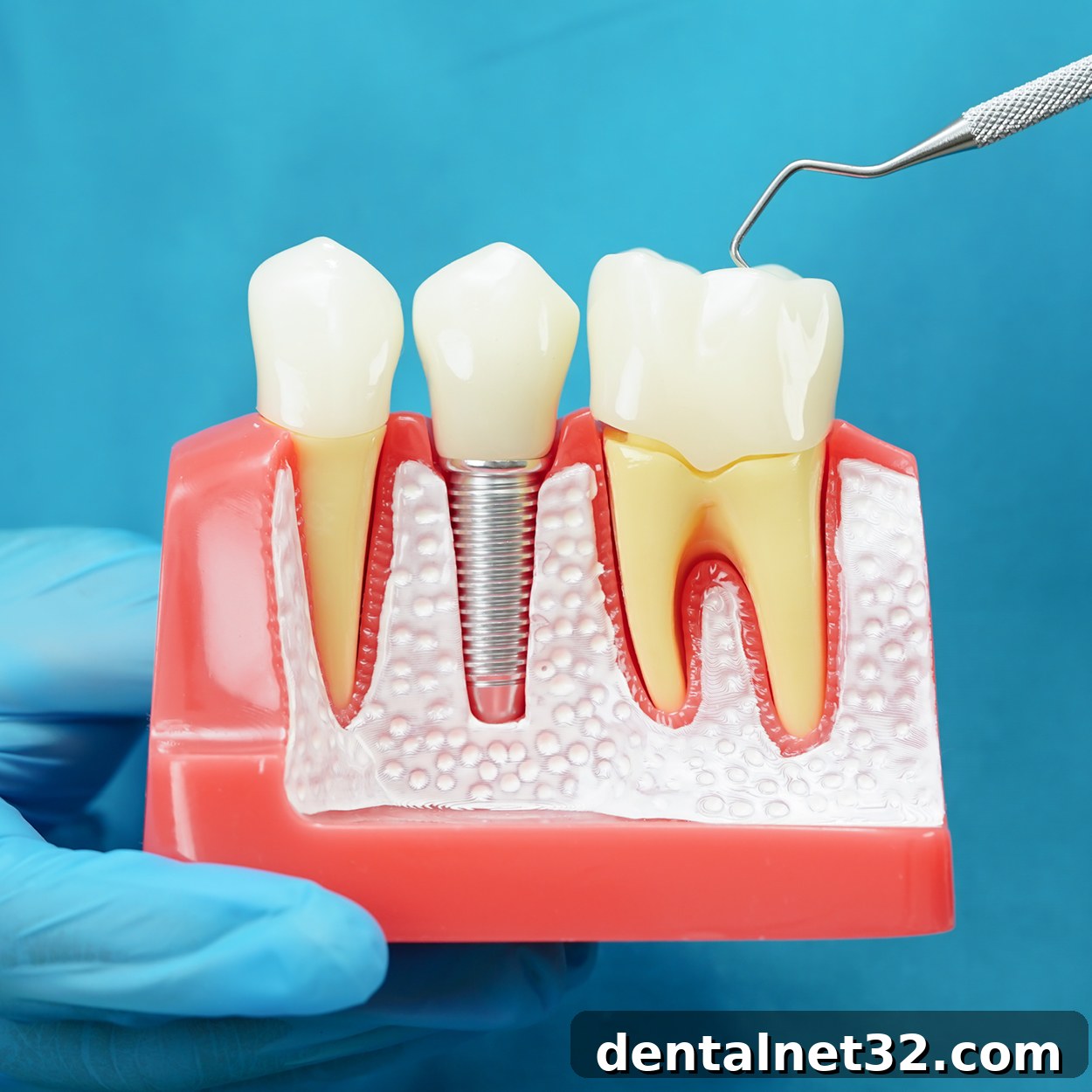
A dental implant is a comprehensive, three-part structure designed to replace an entire tooth, from root to crown.
- The Implant Post: A small, screw-like post made of biocompatible titanium is surgically placed into the jawbone, acting as a new tooth root.
- The Abutment: Once the implant has fused with the bone, a connector piece called an abutment is attached to the post, protruding just above the gumline.
- The Restoration: A custom-made crown, bridge, or denture is then securely attached to the abutment, providing a fully functional and natural-looking replacement tooth.
The magic of this system lies in a process called osseointegration, where the titanium post naturally fuses with the surrounding jawbone. This creates an incredibly strong and stable foundation, just like a natural root, and re-establishes the vital stimulation needed to halt bone loss.
The Unmatched Benefits of Dental Implants
- Preserves Jawbone Health: This is the most significant advantage. By stimulating the bone, implants prevent atrophy and facial collapse, maintaining your facial structure.
- Protects Healthy Teeth: Unlike a dental bridge, which requires the grinding down of healthy adjacent teeth to serve as anchors, implants are self-supporting and leave your natural teeth untouched.
- Unrivaled Durability: With proper oral hygiene and regular dental check-ups, a dental implant can last a lifetime, making it a truly permanent solution.
- Restores Full Function: Implants allow you to eat, speak, and laugh with complete confidence. They do not slip or click like dentures, and they restore nearly 100% of your natural chewing power.
- Superior Aesthetics: The final crown is custom-crafted to match the color, size, and shape of your surrounding teeth, making it virtually indistinguishable from a natural tooth.
Is a Dental Implant a Worthwhile Investment?
It is true that the initial cost of a dental implant is higher than that of traditional dentures or bridges. However, it’s crucial to view this as a long-term investment in your health and well-being. Dentures and bridges often require frequent adjustments, repairs, or complete replacement every 5 to 15 years. These recurring costs can add up over time, eventually exceeding the one-time cost of a permanent implant. When you factor in the health benefits—preventing bone loss, protecting other teeth, and improving your quality of life—dental implants offer unparalleled value and are widely considered the most cost-effective solution over a lifetime.
Embrace the Future of Dental Care and Restore Your Smile
The journey to replacing missing teeth begins with understanding your options and making an informed decision. While traditional methods have their place, the evidence is clear: dental implants provide a superior blend of health, function, and aesthetic benefits that other replacements simply cannot match. They don’t just fill a gap; they rebuild your smile from the root up, restoring your confidence and protecting your health for years to come.
If you are struggling with one or more missing teeth, don’t wait for the domino effect to cause more complex problems. We encourage you to explore the life-changing potential of modern dental implants. The first step is a simple consultation with a qualified dental professional who can assess your unique situation and guide you toward the best solution for your smile. Take action today to reclaim your health, confidence, and the freedom to smile without hesitation.