
Exposed Tooth Roots: Causes, Risks, and Treatments for Gum Recession
Have you ever looked in the mirror and noticed your teeth appearing longer than they used to? Or perhaps felt a sharp twinge of sensitivity when eating ice cream or drinking a hot coffee? These common experiences are often the first signs of an exposed tooth root, a condition caused by gum recession. A patient recently visited our clinic with this exact concern, pointing to a single tooth where the gum line had noticeably pulled back, revealing the root. While it wasn’t painful, the appearance was concerning, and she rightly wanted to know if it signaled a deeper problem. The simple answer is yes; seeing the roots of your teeth is not normal and often indicates an underlying issue that requires professional attention.
This comprehensive guide will explore the anatomy of your gums, delve into the primary causes of gum recession, outline the potential risks of leaving exposed roots untreated, and detail the effective modern treatments available to restore your gum health and protect your smile.
Understanding Healthy Gums and the Onset of Recession
To understand why exposed roots are a problem, it’s essential to first appreciate the role of healthy gum tissue. In a healthy mouth, your gums, or gingiva, fit snugly around each tooth, covering the sensitive root portion and the underlying jawbone. The gum tissue forms a protective seal. There is a tiny, shallow v-shaped groove between the tooth and the gum, known as the sulcus. In a healthy state, this sulcus is typically only 1 to 3 millimeters deep.
This small space is a critical battleground where your body’s immune system combats the daily buildup of bacteria, commonly known as plaque. When oral hygiene is lacking, this plaque hardens into tartar, which can only be removed by a dental professional. This buildup of bacteria triggers an inflammatory response in the gums, leading to a condition called gingivitis, the earliest stage of gum disease. If you notice your gums are red, swollen, or bleed easily when you brush, you are likely experiencing gingivitis.
If left untreated, gingivitis can advance to a more severe form of gum disease called periodontitis. In this stage, the inflammation causes the gums to pull away from the teeth, creating deeper pockets (a sulcus measuring 4 millimeters or more). These pockets become breeding grounds for more harmful bacteria, which begin to destroy the connective tissues and bone that support the teeth. This destructive process is what leads to gum recession and the visible exposure of tooth roots.
Primary Causes of Exposed Tooth Roots
While gum disease is a major contributor, it’s not the only cause of gum recession. Understanding the root cause is key to effective treatment and prevention. The most common reasons for exposed tooth roots include:
- Periodontal Disease (Gingivitis and Periodontitis): As discussed, this bacterial gum infection is the leading cause of gum recession. The body’s inflammatory response to plaque and tartar buildup leads to the gradual destruction of gum tissue and supporting bone, causing the gums to recede and expose the roots.
- Aggressive Tooth Brushing: Believing that harder is better, many people brush their teeth too vigorously. Using a hard-bristled toothbrush or applying excessive force can physically wear away the delicate gum tissue over time, leading to recession. This is a mechanical abrasion of the gums and is why dentists universally recommend using a soft-bristled brush with gentle, circular motions. High-tech power toothbrushes often include pressure sensors to help prevent this type of trauma.
- Genetics and Tooth Anatomy: Some individuals are simply predisposed to gum recession. Factors like having naturally thin gum tissue or insufficient jawbone can make you more vulnerable. In some cases, a tooth may develop in a position that is slightly outside the protective arch of the jawbone. This means one surface of the root lacks bony coverage and is protected only by a thin layer of gum tissue, which is much more susceptible to receding.
- Orthodontic Treatment: While braces are excellent for aligning teeth, the movement of teeth can sometimes result in them being shifted to the edge of their bony housing. This can lead to gum recession, particularly on the front-facing surfaces of the teeth. It is an important factor to discuss with your orthodontist before and during treatment.
- Bruxism (Teeth Grinding): Clenching or grinding your teeth, often unconsciously during sleep, puts immense force on your teeth. This excessive pressure can flex the teeth and cause inflammation and breakdown of the surrounding gum and bone tissue, contributing to recession.
- Tobacco Use: Smokers and users of chewing tobacco are far more likely to develop gum disease. Tobacco products restrict blood flow to the gums, impairing their ability to fight off infection and heal. They also contribute to increased plaque and tartar buildup.
The Dangers of Leaving Exposed Tooth Roots Untreated
Ignoring gum recession can lead to significant oral health complications. An exposed tooth root is not just a cosmetic issue; it’s a health risk. Here’s why:
- Increased Sensitivity: The crown of your tooth is protected by hard enamel. The root, however, is covered by a softer substance called cementum. When the root is exposed, this surface can wear away, revealing the underlying dentin, which contains thousands of microscopic tubules that lead directly to the tooth’s nerve. This is why you may experience sharp pain or sensitivity to hot, cold, sweet, or acidic foods and drinks.
- Higher Risk of Root Cavities: The cementum covering the root is much softer and more susceptible to decay than enamel. An exposed root provides an ideal surface for plaque to accumulate, significantly increasing the risk of developing root cavities, which can be difficult to treat.
- Aesthetic Concerns: Gum recession can make your teeth look unnaturally long and create dark, triangular spaces between them. This can make many people feel self-conscious about their smile.
- Risk of Tooth Loss: This is the most severe consequence. As the gum tissue and bone continue to break down, the tooth loses its support structure. It can become loose and may eventually fall out or require an extraction to prevent further damage to the surrounding area.
Professional Solutions for Gum Recession
If you notice any signs of gum recession, the first step is to schedule a visit with your dentist. They will perform a thorough examination to assess the extent of the recession and determine the underlying cause. Your dentist will measure the quality and quantity of the remaining gum tissue. If the recession is more than a few millimeters, you will likely be referred to a Periodontist, a dentist who specializes in the prevention, diagnosis, and treatment of periodontal disease.
Fortunately, when caught early, gum recession can be effectively treated, and the prognosis for saving the tooth is often excellent. The primary treatment is a gum grafting procedure.
A gingival graft, or gum graft, is a surgical procedure designed to cover the exposed root and rebuild the gumline. This procedure has a high success rate, involves minimal discomfort, and typically takes about an hour. The Periodontist will carefully transplant tissue from one area of your mouth (usually the palate) to the area of recession. This not only covers the sensitive root but also reinforces the thin gum tissue, helping to prevent future recession.
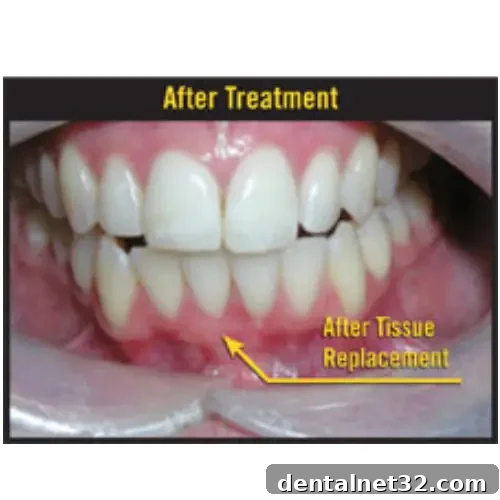
In the case of the patient mentioned at the beginning, her recession was caused by a combination of gum disease and an anatomical issue. A small fold of tissue inside her lower lip, called a frenum, was attached too high on the gumline, constantly pulling on the tissue every time she moved her lip. The treatment involved a frenectomy (a simple procedure to release the frenum’s pull) combined with a gum graft to repair the damaged tissue and cover the root. The procedure was a complete success, with no complications, and the patient’s gum health is now stable.
 Michael Quinn, DMD, has been a practicing dentist since 1987. He is a Board Certified Periodontist and provides periodontal services to patients starting at age 8. Special services include all periodontal services, bone grafting, crown lengthening, dental implants and restorations, endodontic surgery, extractions, gummy smile treatment, periodontal disease management, pre-prosthetic surgery, ridge augmentation, soft tissue grafts and sinus lift. He practices at several Coast Dental offices in Georgia including ones in Atlanta, Marietta, Fayetteville, Lawrenceville, and Stone Mountain.