
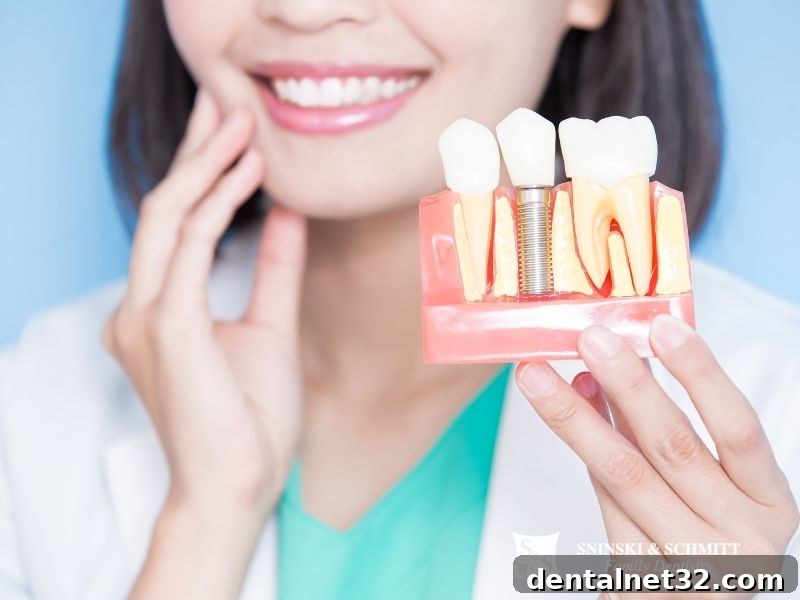
The Ultimate Guide to Dental Implants: A Permanent Solution for Missing Teeth
Losing a tooth is more than just a gap in your smile; it’s a significant event that can impact your confidence, chewing ability, and overall oral health. For years, the primary solutions were dentures or bridges, each with its own set of compromises. Today, dental implants have emerged as the gold standard for tooth replacement. These surgically placed devices offer a permanent, stable, and aesthetically pleasing solution that mimics the function and appearance of natural teeth.
When a tooth is lost, a cascade of problems can begin. The underlying jawbone, no longer stimulated by the tooth’s root, can start to deteriorate. Neighboring teeth may shift into the empty space, leading to a misaligned bite and discomfort. Simple acts like chewing can become difficult, and you might even notice changes in your speech. Dental implants are designed to halt and reverse these issues, providing a foundation for crowns, bridges, or dentures that restores both function and form to your smile.
This comprehensive guide will explore everything you need to know about dental implants, from the surgical process to the long-term benefits and potential risks. Understanding this advanced dental solution is the first step toward reclaiming a healthy, vibrant smile.
Why Missing Teeth Are a Serious Oral Health Concern
A missing tooth creates an empty space that can jeopardize the intricate balance of your entire mouth. By understanding the consequences of tooth loss, you can better appreciate the vital role dental implants play in maintaining long-term oral health. Filling this gap is crucial for improving your quality of life and preventing a series of related dental problems.
Tooth loss can occur for numerous reasons, each requiring a reliable replacement solution. Common causes include:
- Severe Tooth Decay (Cavities): When decay progresses too far, a tooth may be unsalvageable.
- Gum Disease (Periodontitis): This advanced infection can destroy the bone and ligaments that support teeth, causing them to become loose and fall out.
- Physical Trauma: Accidents or injuries can result in cracked or knocked-out teeth.
- Bruxism: Chronic teeth grinding or clenching can wear down and fracture teeth over time.
- Congenital Issues: Some individuals are born without certain teeth, a condition known as anodontia.
The Anatomy of a Dental Implant: A Three-Part System
A dental implant is an engineering marvel designed to replicate a natural tooth from root to crown. It is composed of three primary parts that work together to create a seamless and durable tooth replacement.
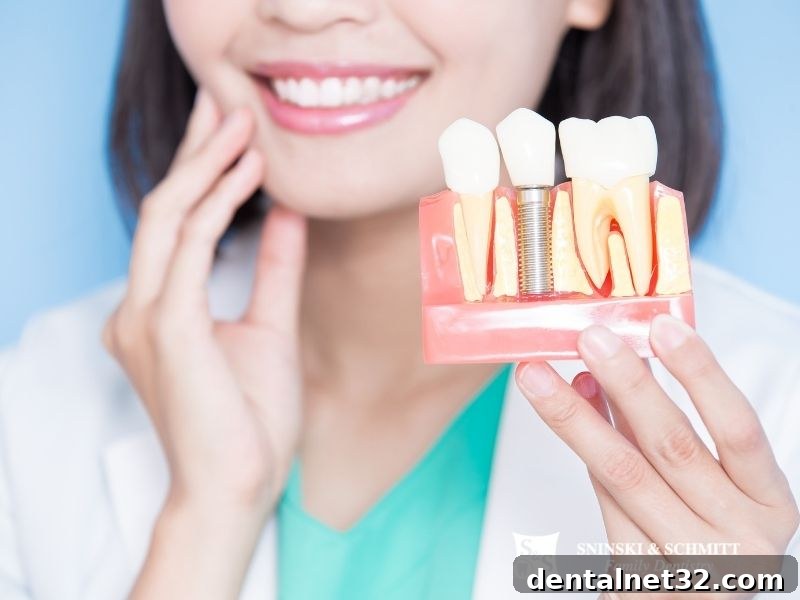
- The Implant Body (Post): This is a small, screw-like post typically made of biocompatible titanium. It is surgically inserted into the jawbone, where it serves as a replacement for the natural tooth root. Over time, it fuses with the bone in a process called osseointegration, creating an incredibly strong and stable foundation.
- The Abutment: After the implant body has fully integrated with the jawbone, an abutment is attached. This connector piece extends just above the gum line and serves as the docking point for the final restoration.
- The Restoration (Crown): The final piece is the custom-made artificial tooth, most commonly a ceramic crown. This crown is carefully crafted to match the color, size, and shape of your surrounding teeth, ensuring a natural and aesthetically pleasing result. It is securely attached to the abutment.
The Dental Implant Procedure: A Step-by-Step Journey
Receiving a dental implant is a multi-stage process that requires careful planning and healing time. Your dental surgeon will use anesthesia or sedation to ensure you are comfortable throughout each phase of the treatment.
- Initial Consultation and Tooth Removal: The journey begins with a thorough examination, including X-rays or 3D imaging, to assess your oral health. If a damaged tooth is still present, it will be gently extracted. The site will then need several weeks to heal before proceeding.
- Jawbone Preparation (Bone Grafting): A successful implant requires a strong, dense jawbone for support. If bone loss has occurred, a bone graft may be necessary. This procedure involves adding bone material (either from your own body, a donor, or a synthetic source) to the area to stimulate new bone growth. This can add several months to the overall timeline as the graft needs to heal and integrate.
- Implant Placement: This is the core surgical step. The dentist will make a small incision in your gum to access the jawbone. A precise channel is then drilled into the bone, and the titanium implant body is carefully placed. The gums are then closed over the implant, and the critical healing process of osseointegration begins. This can take anywhere from three to six months.
- Abutment Placement: Once osseointegration is complete and the implant is securely fused to the bone, a minor procedure is performed to place the abutment. The dentist will reopen the gum tissue to expose the implant and attach the abutment. The gums are then allowed to heal around this connector for a few weeks.
- Artificial Tooth Placement: In the final step, your dentist will take detailed impressions of your mouth. These are used to fabricate a custom crown that will fit perfectly and match your natural teeth. Once the crown is ready, it is securely attached to the abutment, completing your new, fully functional tooth.
Exploring Different Types of Dental Implants
While the basic structure is similar, there are several types of dental implants designed for different clinical situations.
Endosteal Implants
This is the most common and widely used type of implant. Shaped like screws, cylinders, or blades, they are surgically placed directly into the jawbone. Endosteal implants provide a robust foundation and are the preferred choice for patients with a healthy, sufficient amount of jawbone. They serve as a reliable alternative to traditional bridges or removable dentures.
Subperiosteal Implants
This type of implant is used for patients who do not have enough healthy jawbone to support an endosteal implant and cannot or do not wish to undergo a bone grafting procedure. A subperiosteal implant consists of a metal framework that is placed on top of the jawbone but beneath the gum tissue. The restoration is then attached to posts that protrude through the gums.
Zygomatic Implants
Reserved for the most severe cases of upper jaw bone loss, Zygomatic implants are the most complex and least common option. Instead of being placed in the jawbone, these much longer implants are anchored in the patient’s cheekbone (zygoma). This procedure avoids the need for extensive bone grafting in the upper jaw.
The Transformative Benefits of Dental Implants
Dental implants offer a wealth of advantages over other tooth replacement options, significantly improving a person’s health and quality of life.
Key Benefits of Implant Systems
- Prevents Bone Loss: Implants stimulate the jawbone just like natural roots, preventing the bone deterioration that occurs after tooth loss.
- Restores Full Chewing Power: Because they are anchored in bone, implants allow you to bite and chew naturally, so you can enjoy all your favorite foods without worry.
- Improves Speech Clarity: Unlike slipping dentures, implants are fixed in place, allowing you to speak clearly and confidently.
- Creates a Natural-Looking Smile: Custom-made crowns are indistinguishable from natural teeth, restoring your smile’s appearance.
- Offers a Lifetime Solution: With proper care, dental implants are designed to last a lifetime.
- Enhances Denture Stability: Implants can be used to securely anchor unstable or loose-fitting dentures, eliminating slipping and discomfort.
Furthermore, implants do not require altering adjacent healthy teeth, as a dental bridge does. They are cared for with simple brushing and flossing, just like natural teeth, and by replacing a missing or infected tooth, they help reduce the risk of further oral health problems.
Understanding the Potential Risks and Complications
While dental implant surgery has a very high success rate, it is a surgical procedure and carries some potential risks and complications. Being informed is key to making the right decision for your health.
Potential Complications
The most significant complication is implant failure. This can happen for two primary reasons:
- Failure of Osseointegration: In rare cases, the implant does not properly fuse with the jawbone. The implant will remain loose and unable to support a crown. This can be caused by factors like insufficient bone density, smoking, or certain medical conditions. The failed implant must be removed, and after a healing period, a new attempt may be possible.
- Peri-Implantitis: This is an inflammatory condition, similar to gum disease, that affects the tissues around an implant. It is often caused by poor oral hygiene and can lead to bone loss and implant failure if left untreated.
General Surgical Risks
Like any surgery, the placement procedure has inherent risks:
- Infection: Any surgical site is at risk of infection. Your dentist will provide strict aftercare instructions to keep the area clean and may prescribe antibiotics.
- Sinus Damage: When placing implants in the upper jaw, there is a small risk of the implant protruding into the sinus cavity, which can lead to inflammation or infection. Careful planning with 3D imaging helps minimize this risk.
- Nerve Damage: While rare, it is possible for the surgical placement to affect nearby nerves, leading to numbness or tingling in the lips, chin, or gums. Pre-surgical imaging helps dentists map nerve locations to avoid this.
- Damage to Surrounding Teeth: The procedure could potentially damage adjacent teeth or blood vessels, though this is uncommon with an experienced surgeon.
Are You a Good Candidate for Dental Implants?
Most people who have lost a tooth are good candidates for dental implants. However, certain factors contribute to a higher success rate. Ideal candidates generally have:
- Good Overall and Oral Health: Healthy gums and a commitment to excellent oral hygiene are essential.
- Adequate Jawbone Density: There must be enough bone in the jaw to support the implant.
- Healthy Habits: Heavy smoking can impair healing and increase the risk of implant failure.
- No Uncontrolled Chronic Diseases: Conditions like uncontrolled diabetes can interfere with the healing process.
A thorough evaluation by your dentist will determine if dental implants are the right choice for you.