

Can a Cracked Tooth Heal on Its Own? A Comprehensive Guide
When we get a cut on our skin or even break a bone, our bodies have a remarkable capacity for self-repair. This natural healing process often leads us to wonder: can a cracked tooth heal on its own, too? While our teeth are incredibly strong—capable of withstanding significant biting force—they don’t share the same regenerative abilities as our bones or skin. Understanding why is the first step toward getting the right treatment and preserving your smile.
If you’ve felt a sudden jolt of pain while biting down or noticed a new sensitivity in one of your teeth, you might be dealing with a crack. This guide will explore why teeth can’t self-heal, the common causes and symptoms of a cracked tooth, and the essential dental treatments that can restore its function and appearance. Seeking prompt dental care is crucial, and this article will explain exactly why.
Why Your Cracked Tooth Can’t Heal Itself: A Look at Tooth Anatomy
To understand why a cracked tooth requires professional intervention, we need to look at what teeth are made of. Contrary to common belief, teeth are not bones. While both are rich in calcium and essential for our health, their fundamental composition and ability to heal are vastly different.
A tooth is comprised of four main layers:
- Enamel: This is the outermost layer of your teeth and the hardest substance in the human body. Its primary component is calcium phosphate, forming a highly mineralized, protective shell. Crucially, enamel contains no living cells, blood vessels, or nerves. This is the key reason it cannot regenerate or repair itself once it’s chipped, cracked, or worn away by decay.
- Dentin: Located just beneath the enamel, dentin is a yellowish, bone-like material that makes up the bulk of the tooth. It contains microscopic tubules that lead directly to the tooth’s nerve center. While harder than bone, it’s softer than enamel, making it more vulnerable if the enamel is compromised. When a crack extends into the dentin, it can cause significant sensitivity and pain.
- Pulp: At the very center of the tooth lies the pulp. This soft tissue contains blood vessels, nerves, and connective tissue. The pulp is the “living” part of the tooth, responsible for providing nutrients and sending pain signals to the brain. If a crack reaches the pulp, it can lead to severe pain and infection.
- Cementum: This layer covers the root of the tooth, helping to anchor it within the jawbone.
Because the protective enamel layer is acellular (contains no living cells), it lacks the biological mechanism to mend itself. Unlike a broken bone, which is filled with blood vessels and cells that initiate a healing cascade, a cracked tooth will remain damaged and can worsen over time without treatment.
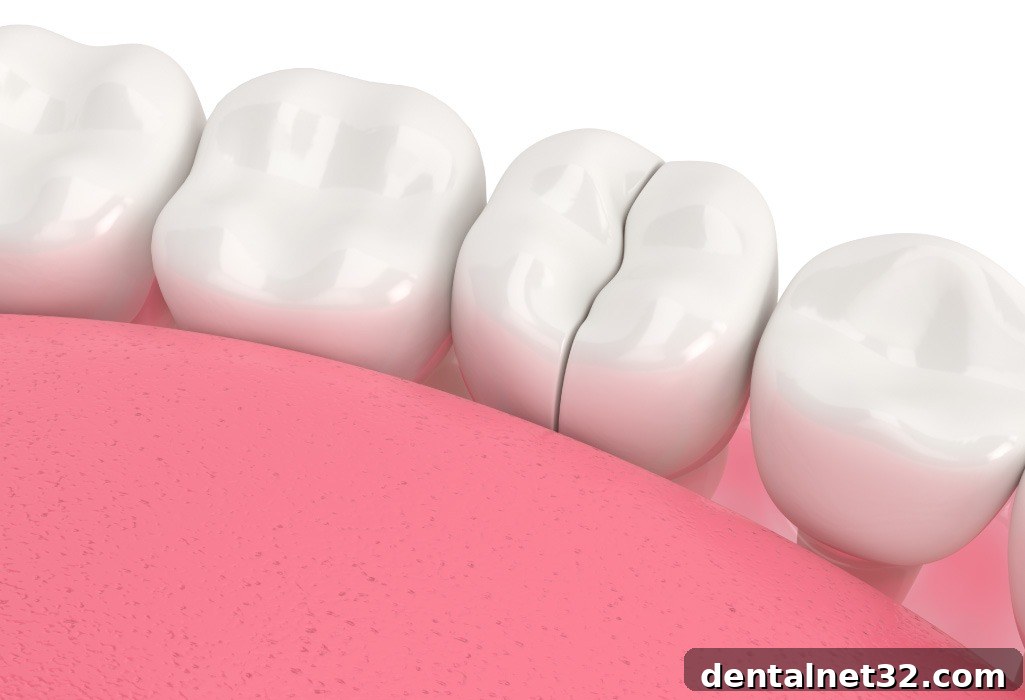
Understanding the Different Types of Cracked Teeth
A “cracked tooth” isn’t a single diagnosis. The term covers several types of fractures, each varying in severity and required treatment. A dentist will identify the specific type of crack to recommend the most effective solution.
- Craze Lines: These are extremely fine, vertical cracks that only affect the outer enamel. They are very common in adult teeth and are usually a cosmetic issue, rarely requiring treatment unless for aesthetic reasons. They typically don’t cause any pain.
- Fractured Cusp: This occurs when a piece of the tooth’s chewing surface breaks off, often around a filling. A fractured cusp doesn’t always cause much pain because it usually doesn’t affect the tooth’s pulp.
- Cracked Tooth: This type of fracture involves a crack that extends from the chewing surface vertically toward the root. The tooth has not yet separated into distinct pieces, but the crack can gradually spread. Early diagnosis and treatment are vital to save the tooth.
- Split Tooth: A split tooth is often the result of an untreated cracked tooth. By this stage, the crack has progressed down to the root, separating the tooth into two distinct segments. It is rarely possible to save the entire tooth in this scenario.
- Vertical Root Fracture: This is a crack that begins in the root of the tooth and extends upward toward the chewing surface. These fractures often show minimal signs and symptoms and may go unnoticed until the surrounding bone and gum become infected.
Common Causes and Symptoms of a Cracked Tooth
Cracks can develop for various reasons, often related to excessive pressure or trauma. Recognizing the cause can help in preventing future incidents. Common culprits include:
- Biting on hard objects: Chewing on ice, hard candy, popcorn kernels, or non-food items like pens can place immense stress on your teeth.
- Trauma or injury: A blow to the mouth from a sports injury, a fall, or another accident can easily crack a tooth.
- Teeth grinding (Bruxism): The chronic pressure from clenching or grinding your teeth, especially during sleep, can lead to cracks over time.
- Large dental fillings: Large fillings can sometimes weaken the integrity of the natural tooth structure, making it more susceptible to fracturing.
- Sudden temperature changes: Exposing your teeth to rapid temperature shifts, such as eating hot soup followed by a drink of ice water, can cause the enamel to expand and contract, potentially leading to cracks.
The symptoms of a cracked tooth can vary widely, sometimes making it difficult to diagnose. Be on the lookout for:
- Erratic pain: You might feel pain when biting or chewing, which may disappear when you release the bite.
- Sensitivity: A pronounced sensitivity to hot, cold, or sweet foods and drinks is a common sign.
- Swelling: The gum around the affected tooth may become swollen or tender, especially if an infection has developed.
- A feeling of something being “off”: Sometimes, there’s no sharp pain, but the tooth just doesn’t feel right when you bite down.
Professional Dental Treatments for a Cracked Tooth
Since a cracked tooth cannot heal on its own, seeking professional dental care is not just recommended—it’s essential. The treatment plan will depend entirely on the type, location, and severity of the crack. The primary goal is always to relieve pain, prevent infection, and save the natural tooth whenever possible.
Dental Bonding or Filling
For minor cracks, such as small chips or craze lines that are cosmetically concerning, dental bonding is an excellent solution. A dentist applies a tooth-colored composite resin to the surface of the tooth, filling in the crack. The resin is then hardened with a special light, effectively “bonding” to the tooth structure. This simple, minimally invasive procedure can restore the tooth’s appearance and seal the crack to prevent further damage.
Dental Crowns
When a crack is more significant, particularly in the case of a fractured cusp or a cracked tooth that hasn’t reached the root, a dental crown is often the best treatment. A crown is a custom-made cap that fits over the entire tooth, down to the gum line. It holds the cracked pieces of the tooth together, providing strength and protection from biting forces. This not only restores the tooth’s function but also prevents the crack from spreading further.
Root Canal Therapy
If a crack has extended deep into the tooth and reached the pulp, the nerve and blood vessels can become inflamed or infected. This is usually the source of intense, throbbing pain. To save the tooth, a root canal is necessary. During this procedure, the dentist removes the damaged pulp, cleans and disinfects the inside of the tooth, and then fills and seals it. After a root canal, the tooth will typically need a crown to protect it from future fractures.
Tooth Extraction
In the most severe cases, such as a split tooth or a vertical root fracture where the damage is too extensive, saving the tooth may not be possible. In these situations, extraction is the only viable option to prevent infection and pain from spreading. After extraction, your dentist will discuss replacement options like a dental implant, bridge, or partial denture to restore your smile and chewing function.
The Importance of Acting Quickly
A cracked tooth is more than just a cosmetic issue; it’s a dental emergency. Ignoring it allows the crack to deepen and spread, potentially turning a simple repair into a complex and costly procedure. What might have been fixed with a simple bonding treatment could eventually require a root canal or even an extraction. Furthermore, an open crack provides a pathway for bacteria to enter the inner pulp of the tooth, leading to a painful infection or abscess that can affect your overall health.
Your natural teeth are invaluable. While a cracked tooth cannot heal itself, modern dentistry offers a range of effective treatments to repair the damage and preserve your tooth for years to come. If you suspect you have a cracked tooth, don’t wait for the pain to worsen. Schedule an appointment with your dentist immediately for a proper diagnosis and to explore the best treatment options for your situation.