
The Ultimate Guide to Cleaning Your Dentures for a Brighter, Healthier Smile
Your dentures are a significant investment in your smile, confidence, and overall quality of life. Whether you have full or partial dentures, maintaining their cleanliness is not just about aesthetics—it’s a critical component of your oral health. Improperly cleaned dentures can lead to a host of problems, including bad breath, gum irritation, and serious oral infections. Fortunately, establishing a simple yet effective cleaning routine is easy and can significantly extend the life of your prosthetic teeth while keeping your mouth healthy.
This comprehensive guide will walk you through everything you need to know about how to clean your dentures properly. We’ll cover the essential daily steps, effective soaking techniques, common mistakes to avoid, and why professional cleanings are non-negotiable for long-term denture care. Let’s dive in and ensure your smile remains as bright and healthy as the day you got your new teeth.
Why Meticulous Denture Care is So Important
Before we explore the “how-to,” it’s crucial to understand the “why.” Many people underestimate the importance of denture hygiene, assuming that because they are artificial, they don’t require the same level of care as natural teeth. This is a dangerous misconception. Here’s why a consistent cleaning regimen is essential:
- To Prevent Plaque and Tartar Buildup: Just like natural teeth, dentures can accumulate plaque—a sticky film of bacteria. If not removed daily, this plaque can harden into tartar (calculus), which is much more difficult to remove and can cause staining and bad breath.
- To Avoid Gum Disease and Irritation: The bacteria that thrive on dirty dentures can irritate the soft tissues of your gums. This can lead to a painful condition called denture stomatitis, characterized by redness, swelling, and inflammation of the tissue beneath the denture.
- To Stop Fungal Infections: An unclean denture provides the perfect warm, moist environment for fungus, like Candida albicans, to grow. This can result in an uncomfortable oral yeast infection known as thrush, which appears as white patches in the mouth.
- To Eliminate Bad Breath (Halitosis): Food particles and bacteria trapped on and under your dentures will decompose, releasing unpleasant odors that cause persistent bad breath.
- To Preserve the Denture’s Appearance and Fit: Regular cleaning prevents unsightly stains from food, drinks (like coffee and red wine), and tobacco. It also helps maintain the denture’s original shape, ensuring a comfortable and secure fit. A dry or warped denture will not fit properly.
Your Step-by-Step Daily Denture Cleaning Routine
Consistency is key to effective denture maintenance. Think of this daily routine as the foundation of your oral health. It should take only a few minutes each day and will make a world of difference.
Step 1: Rinse After Every Meal
The simplest yet most effective habit you can adopt is to remove and rinse your dentures after eating. Hold them securely under cool or lukewarm running water to wash away loose food particles and debris. This prevents food from getting trapped between the denture and your gums, which can cause significant irritation. Crucial Tip: Never use hot water, as it can cause the acrylic material to warp, permanently altering the fit of your dentures.
Step 2: Handle With Care
Dentures are durable but not indestructible. They can easily break if dropped onto a hard surface like a porcelain sink or tiled floor. To prevent accidental damage during cleaning, always handle them over a sink filled with water or a folded soft towel. This provides a cushion in case they slip from your hands.
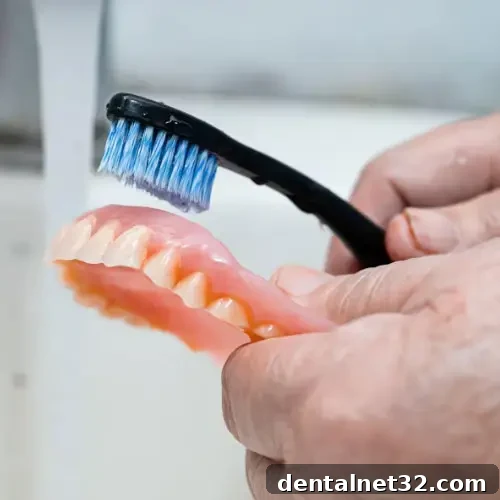
Step 3: Brush Your Dentures Thoroughly Every Day
Rinsing alone is not enough to remove microbial plaque. A daily brushing is mandatory. However, the tools and techniques differ from brushing natural teeth.
- Use the Right Brush: Invest in a soft-bristled denture brush. These brushes are specially designed with two different-shaped heads: a larger, flat head for broad surfaces and a smaller, tapered head for cleaning the hard-to-reach crevices. If you don’t have a denture brush, a very soft-bristled toothbrush will suffice. Avoid medium or hard-bristled brushes at all costs.
- Choose a Non-Abrasive Cleaner: Regular toothpaste is too abrasive for dentures. It contains particles that can create microscopic scratches on the denture surface. While invisible to the naked eye, these scratches become breeding grounds for bacteria and can cause stains to set in more easily. Instead, use a non-abrasive denture paste, a mild liquid dish soap, or a simple hand soap.
- The Brushing Technique: Apply a small amount of your chosen cleaner to the wet brush. Gently but thoroughly brush all surfaces of the denture, both inside and out. Pay special attention to the grooves that fit against your gums, as this is where plaque and bacteria are most likely to hide. After brushing, rinse the denture completely under cool water to remove all traces of the cleaning agent.
Don’t Forget to Clean Your Mouth
Denture care isn’t just about the appliance itself; it’s about your entire mouth. After removing your dentures for their nightly soak, it’s essential to clean your gums, tongue, and the roof of your mouth. Use a very soft toothbrush, a damp piece of gauze, or a clean washcloth to gently massage these tissues. This action does two important things: it removes any residual plaque and adhesive from your gums, and it stimulates blood circulation, which helps keep the tissues healthy.
The Overnight Soak: An Essential Step for Hygiene and Longevity
Never sleep with your dentures in unless specifically advised by your dentist for a short period. Your gums need time to rest and recover from bearing the pressure of the dentures all day. Removing them overnight is the perfect time for the most critical part of the deep-cleaning process: the soak.
Why Soaking is Mandatory
Soaking dentures overnight serves two primary purposes. First, it disinfects them, killing bacteria that brushing might have missed. Second, it keeps the acrylic material hydrated. If dentures are left to dry out, they can lose their shape, become brittle, and crack. A well-fitting denture relies on staying moist.
Choosing the Right Soaking Solution
You have several options for soaking your dentures:
- Specialized Denture Cleansers: These are the most common and recommended choice. They come in tablet or powder form that you dissolve in water. These effervescent solutions are formulated to effectively remove stains, kill 99.9% of odor-causing bacteria, and dissolve plaque in a non-abrasive way.
- Plain Water: If you’re out of cleanser, soaking your dentures in cool, clean water is far better than letting them dry out. However, water alone will not disinfect them.
- Diluted Vinegar Solution (Use with Caution): A homemade solution of one part white vinegar to four parts water can help dissolve mineral deposits (tartar). However, this should not be your daily solution, as prolonged exposure to acid can potentially damage the denture material or corrode metal clasps on partials. Use it sparingly, perhaps once a week, and always consult your dentist first.
After soaking, always rinse your dentures thoroughly with fresh water before placing them back in your mouth. This is especially important if you use a chemical cleanser, as residual chemicals can cause irritation or an allergic reaction.
Common Denture Care Mistakes You Must Avoid
Proper care is as much about what you don’t do as what you do. Steer clear of these common and damaging mistakes:
- Using Bleach: Bleach-containing products can weaken the denture structure and will discolor the pink, gum-colored portion of the acrylic.
- Using Abrasive Materials: Never use harsh scouring pads, stiff-bristled brushes, or abrasive cleaners (including most toothpastes and baking soda) on your dentures.
- Using Hot Water: As mentioned, boiling or very hot water can warp your dentures, leading to a poor fit.
- Neglecting Your Gums: Failing to clean your gums can lead to inflammation and infection.
- Attempting DIY Repairs: Never use over-the-counter glues to fix a broken or cracked denture. These glues are not biocompatible, can be toxic, and will often cause irreparable damage, making a professional repair impossible.
The Role of Professional Care: When to See Your Dentist
Even with the most diligent home care, professional check-ups are vital. You should visit your dentist at least once a year for a check-up and professional cleaning. Your dental team has ultrasonic cleaners and specialized polishes that can remove stubborn tartar and stains that home cleaning cannot. They will also examine the denture for wear and tear.
More importantly, the dentist will examine your mouth and check the fit of your dentures. Over time, your jawbone and gums naturally change shape, which can cause dentures to become loose. A loose denture can cause sores and make it difficult to eat and speak. Your dentist can reline or adjust your denture to ensure it continues to fit comfortably and correctly.
By integrating this simple cleaning routine into your daily life and maintaining regular dental visits, you can ensure your dentures remain comfortable, look great, and last for many years. A clean denture is the cornerstone of a healthy mouth and a confident, beautiful smile.