
The Ultimate Guide to Denture Care: Keep Your Smile Bright and Healthy
Congratulations on your new dentures! Regaining the ability to eat, speak, and smile with confidence is a truly life-changing experience. After weeks, months, or even years of dealing with missing teeth, your new prosthesis offers a fresh start. However, to ensure your dentures last for years and remain comfortable, establishing a proper care routine is essential. Think of your dentures as a long-term investment in your health and happiness.
Proper maintenance not only preserves the appearance and function of your dentures but also protects your oral health. Neglecting them can lead to gum irritation, infections, and discomfort. This comprehensive guide provides expert tips and detailed instructions on how to care for your removable dentures, ensuring they serve you well for years to come.
Adjusting to Life with New Dentures
The first few weeks with a new set of dentures is an adjustment period. It’s perfectly normal to experience some initial discomfort or minor sore spots as your mouth adapts. Your eating and speaking patterns might also feel different. This is a temporary phase.
It is crucial to schedule a follow-up visit with your dentist within 24 to 48 hours of receiving your dentures. This appointment allows your dentist to make necessary adjustments to ensure a perfect fit, which will significantly reduce soreness and improve comfort. Don’t be discouraged if things don’t feel perfect right away; your mouth needs time to acclimate to the new prosthesis.
Your Daily Denture Care Routine: A Step-by-Step Guide
A consistent daily routine is the cornerstone of effective denture care. Following these steps will help prevent staining, plaque buildup, and potential damage, keeping both your dentures and your mouth in excellent condition.
Step 1: Rinse Dentures After Every Meal
One of the simplest yet most effective habits you can adopt is rinsing your dentures after eating. Carefully remove them and hold them under cool or lukewarm running water. This quick rinse helps to dislodge food particles and debris that can get trapped between the denture and your gums. Failing to remove this debris can lead to gum irritation, inflammation, and even fungal infections like oral thrush. It also helps in preventing bad breath.
Step 2: Brush Your Dentures Thoroughly Every Day
Just like natural teeth, dentures require daily brushing to remove plaque, food deposits, and stains. However, the method and tools you use are different. Here’s how to do it correctly:
- Handle with Care: Dentures can be fragile and may break if dropped. Always handle them over a soft surface, such as a folded towel or a basin filled with water. This provides a cushion in case they slip from your hands.
- Use the Right Tools: Invest in a soft-bristled denture brush. These brushes are specifically designed with bristles of different shapes and lengths to effectively clean all the contours and grooves of your prosthesis. Avoid hard-bristled brushes, as they can scratch the denture surface.
- Choose a Non-Abrasive Cleaner: Never use regular toothpaste on your dentures. Most toothpastes contain abrasive particles that are great for tooth enamel but can create microscopic scratches on the softer acrylic surface of dentures. These scratches can become a breeding ground for bacteria and cause stains to set in more easily. Instead, use a specially formulated denture paste or a mild, non-abrasive soap.
- Be Thorough: Gently brush every surface of the denture, paying close attention to the areas that come in contact with your gums. A thorough cleaning helps maintain a fresh feeling and prevents the buildup of harmful bacteria.
Step 3: Soak Your Dentures Overnight
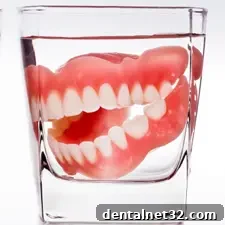
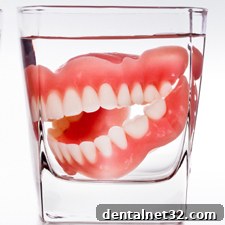
Dentures are designed to stay moist. If they are allowed to dry out, the acrylic material can warp, permanently altering their shape and fit. An ill-fitting denture can cause significant discomfort and may need to be replaced. To prevent this:
- Always Keep Them Moist: When you take your dentures out for the night, they must be stored in a liquid.
- Use the Right Solution: Soak them in a specialized denture-cleaning solution or plain, cool water. Many effervescent cleaning tablets are available that help to dissolve stains and kill odor-causing bacteria. Ask your dentist for a recommendation. It’s beneficial to use a cleaning solution at least three times a week for a deeper clean.
- Avoid Hot Water: This is a critical rule. Never soak or rinse your dentures in hot or boiling water. The heat can melt and warp the plastic, ruining the precise fit of your prosthesis. Always use cool or lukewarm water.
Caring for Your Mouth and Gums
Denture care extends beyond the appliance itself. Maintaining the health of your gums and oral tissues is equally important for overall comfort and health.
- Give Your Gums a Rest: It’s vital to remove your dentures for at least six to eight hours every day, typically while you sleep. This allows your gum tissues to rest from the pressure of the denture, promoting better circulation and reducing the risk of irritation.
- Clean Your Mouth Daily: After removing your dentures, use a very soft toothbrush to gently brush your gums, tongue, and the roof of your mouth (palate). This not only removes plaque but also stimulates blood flow in the tissues, which helps keep them healthy and resilient.
Common Denture Care Mistakes to Avoid
Protect your investment by steering clear of these common pitfalls:
- Don’t Lose Them: It may sound obvious, but dentures are frequently misplaced. A common scenario is wrapping them in a napkin at a restaurant and accidentally throwing them away. Always store your dentures in a designated, brightly colored case when they are not in your mouth.
- Keep Away from Pets and Children: Curious pets, especially dogs, are often attracted to dentures. They can easily chew and destroy them. Keep your dentures safely out of reach of pets and small children.
- Never Attempt DIY Repairs: If your denture cracks, chips, or feels loose, do not try to fix it yourself with household adhesives. Super glues and other over-the-counter glues contain harmful chemicals and can cause irreparable damage. Always see your dentist for professional repairs or adjustments.
The Lifespan of Your Dentures
Over time, your mouth naturally changes. Your jawbone and gums can shrink or shift, which will cause your dentures to become loose. A poorly fitting denture can cause sores and make eating difficult. With proper care and maintenance, a quality set of dentures should last between five and eight years.
Regular dental check-ups are essential. Your dentist will examine the fit of your dentures and the health of your mouth. They can perform professional cleanings and make adjustments, such as a reline, to ensure your dentures continue to fit comfortably and function correctly. By following these care guidelines and maintaining a relationship with your dental professional, you can enjoy all the wonderful benefits of your new smile for many years to come.