
When we think about oral health, our attention often goes straight to our teeth. We worry about cavities, whitening, and alignment. But the true foundation of a healthy smile lies in something we often overlook: our gums. Your gums, or gingiva, are the unsung heroes of your mouth. They provide the critical support that anchors your teeth, forming a protective seal that is essential for both your oral and overall health.
Healthy gums create a tight barrier around your teeth, preventing harmful bacteria from infiltrating the sensitive tooth roots and the underlying jawbone. When this barrier is compromised, it can lead to a cascade of problems, from chronic inflammation and tissue degradation to tooth loss and even serious systemic health conditions. Understanding the pivotal role of gum health is the first step toward achieving a truly healthy, pain-free smile that lasts a lifetime.
The connection between your gums and the rest of your body is profound. Because the gum tissue is rich with blood vessels, an untreated infection like gum disease can provide a direct pathway for harmful bacteria to enter your bloodstream. This can trigger inflammatory responses throughout your body, linking poor oral health to a range of serious medical issues.
In this comprehensive guide, we will delve into the critical importance of gum health. We’ll explore what healthy gums look like, break down the stages of gum disease, and uncover the deep connection between your mouth and your overall well-being. Our goal is to empower you with the knowledge to protect the foundation of your smile for years to come.
What Defines Healthy Gums?
So, what should you be looking for when you check your gums in the mirror? Healthy gums have a distinct appearance and feel. They are typically firm to the touch, not puffy or soft. Their color is generally a consistent coral pink, though natural pigmentation can vary based on ethnicity, sometimes appearing darker or spotted, which is perfectly normal. Most importantly, healthy gums fit snugly around each tooth, with no gaps or pockets. This tight seal is what provides the essential protective barrier against plaque and bacteria.
Key signs of healthy gums include:
- Color: A uniform, pale pink color (or your natural pigmented tone).
- Texture: Firm and resilient, not swollen, puffy, or tender.
- Bleeding: They should not bleed when you brush or floss. Bleeding is a common first sign of inflammation.
- Contour: They should have a scalloped shape that follows the curve of your teeth, fitting tightly against them.
- Recession: The gum line should be stable, not pulling away from the teeth and exposing the roots.
Think of your gums as the bedrock for your teeth. When this foundation is strong and healthy, your entire oral structure is more secure and protected from disease.
Understanding Gum Disease: From Gingivitis to Periodontitis
Gum disease is an infection and inflammation of the tissues that support your teeth. It is primarily caused by the buildup of plaque—a sticky film of bacteria—that hardens into tartar if not removed. Gum disease progresses in stages, and it’s crucial to identify it early. The two main types are gingivitis and periodontitis.
Gingivitis: This is the earliest and mildest form of gum disease. It is an inflammation of the gums caused by plaque buildup at the gumline. Nearly half of all adults over 30 in the U.S. experience some form of gingivitis. The good news is that at this stage, the disease is completely reversible with diligent oral hygiene and professional dental cleanings.
Periodontitis: If gingivitis is left untreated, it can advance to periodontitis. This is a much more serious infection that spreads below the gum line and begins to damage the tissues and bone that support the teeth. According to the Mayo Clinic, untreated periodontitis will ultimately destroy the supporting bone, making it the leading cause of tooth loss in adults. This advanced disease affects over 47% of adults over 30, and that number increases to 70% for adults over 65.
The 4 Stages of Gum Disease Progression
Gum disease doesn’t happen overnight. It develops through distinct stages, each with worsening symptoms and consequences.
- Stage 1: Gingivitis (Early Stage)
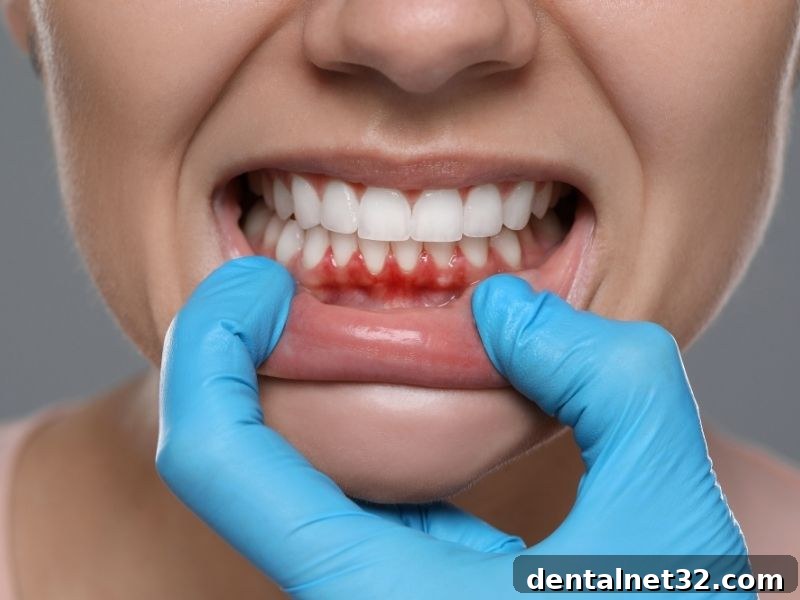
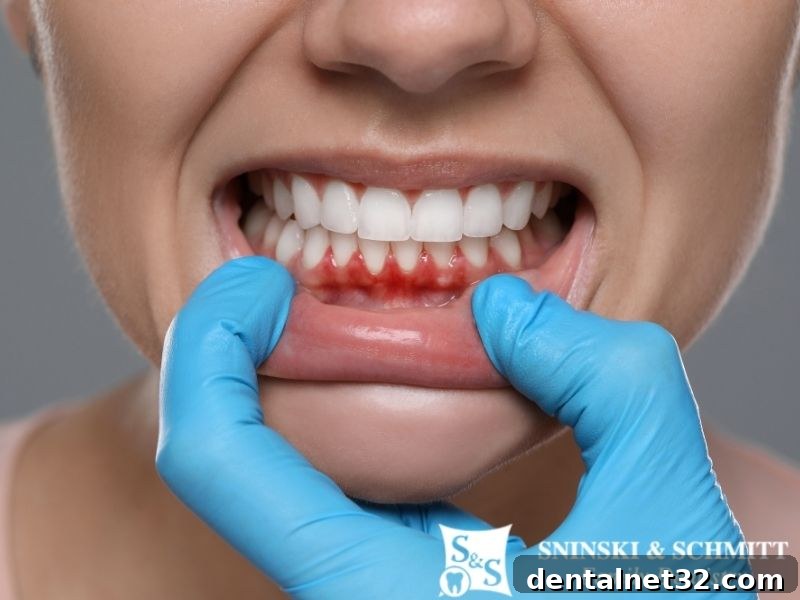
At this initial stage, you might notice that your gums are red, swollen, and bleed easily when you brush or floss. You may also experience bad breath. The inflammation is confined to the gum tissue, and no irreversible bone or tissue damage has occurred yet. This stage is your body’s alarm bell, signaling that you need to improve your oral care routine immediately.
- Stage 2: Mild Periodontitis
If gingivitis is not addressed, the inflammation worsens, causing the gums to start pulling away from the teeth. This creates small spaces called “periodontal pockets.” These pockets trap plaque and bacteria, making them impossible to clean with a regular toothbrush. The infection has now begun to attack the bone that supports your teeth. While this damage is irreversible, its progression can be halted with a professional deep cleaning procedure known as scaling and root planing.
- Stage 3: Moderate Periodontitis
As the disease progresses, the pockets deepen, and more bone and tissue are lost. Your teeth may begin to feel loose or shift their position. Symptoms become more pronounced and can include persistent bad breath, pain when chewing, and visible gum recession, making your teeth appear longer. Treatment at this stage is more intensive and focuses on preventing further destruction and saving the teeth.
- Stage 4: Advanced Periodontitis
This is the most severe stage of gum disease. The infection has caused extensive destruction of the bone and connective tissues. Teeth often become very loose and may need to be extracted. Painful abscesses (pus-filled infections) can form. Saving the teeth at this point requires complex and often surgical treatments, such as gum grafting or laser therapy, to try and regenerate some of the lost tissue.
Why Gum Health Is the True Foundation of Your Smile
The term “foundation” is not just a metaphor; it’s a biological reality. Healthy gums provide the structural and protective framework that keeps your teeth stable and safe for the long term. Without healthy gum tissue, even perfectly strong and cavity-free teeth are at risk.
The Protective Barrier Against Bacteria
As mentioned, healthy gums form a tight seal around the base of your teeth. This barrier is crucial because it physically blocks bacteria and food particles from getting to the sensitive root surfaces and the alveolar bone underneath. When gum disease weakens this seal, it opens the door for infection to take hold where it can do the most damage.
Structural Support and Stability
Your teeth aren’t just embedded directly in your jawbone. They are held in place by a complex system of connective tissues, including the periodontal ligament, and are supported by the alveolar bone. Your gums protect this entire support structure. When inflammation from periodontitis sets in, the body’s immune response, combined with bacterial toxins, begins to destroy these tissues. As the bone deteriorates, the teeth lose their anchor, becoming loose and eventually falling out.
The Mouth-Body Connection: How Gums Affect Your Overall Health
The importance of gum health extends far beyond your mouth. The chronic inflammation associated with periodontitis can have systemic effects. Bacteria from infected gums can enter the bloodstream and travel to other parts of the body, contributing to a host of serious health problems.
Research has established strong links between gum disease and the following conditions:
- Heart Disease: The inflammation caused by periodontitis is linked to an increased risk of heart disease, stroke, and atherosclerosis (hardening of the arteries).
- Diabetes: The relationship is a two-way street. People with diabetes are more susceptible to gum disease, and severe gum disease can make it harder to control blood sugar levels.
- Respiratory Infections: Bacteria from the mouth can be inhaled into the lungs, potentially causing pneumonia and other respiratory illnesses, especially in older adults.
- Pregnancy Complications: Periodontitis has been linked to premature birth and low birth weight.
Warning Signs of Gum Disease You Cannot Ignore
Early detection is key to managing and reversing gum disease. If you notice any of the following symptoms, it’s time to schedule a dental appointment:
- Gums that bleed during or after brushing and flossing
- Red, swollen, or tender gums
- Persistent bad breath or a bad taste in your mouth
- Receding gums that make your teeth look longer
- Pockets forming between teeth and gums
- Loose or shifting teeth
- Changes in the way your teeth fit together when you bite
Common Risk Factors for Poor Gum Health
Several factors can increase your susceptibility to developing gum disease. Being aware of them can help you take extra precautions:
- Poor Oral Hygiene: This is the primary cause, allowing plaque to build up.
- Smoking and Tobacco Use: Smoking weakens your immune system and reduces blood flow to the gums, impairing their ability to heal.
- Diabetes: Uncontrolled blood sugar levels compromise the body’s ability to fight infection.
- Hormonal Changes: Fluctuations during puberty, pregnancy, and menopause can make gums more sensitive.
- Genetics: Some people are simply more genetically predisposed to gum disease.
- Stress: Chronic stress can make it more difficult for your body to fight off infections, including periodontitis.
- Dry Mouth: Saliva helps wash away bacteria, so a lack of it increases risk. Certain medications can cause dry mouth.
How to Prevent Gum Disease and Maintain Lifelong Oral Health
The best treatment for gum disease is prevention. A consistent and effective oral hygiene routine is your best defense.
- Brush Correctly Twice a Day: Use a soft-bristled toothbrush and fluoride toothpaste. Brush for two full minutes, using gentle, circular motions to clean every surface of your teeth and along the gumline.
- Floss Daily: Flossing is non-negotiable. It removes plaque and food particles from between your teeth and under the gumline, where your toothbrush can’t reach.
- Use an Antimicrobial Mouthwash: A therapeutic mouthwash can help reduce bacteria and plaque in your mouth. Ask your dentist for a recommendation.
- Schedule Regular Dental Cleanings: Professional cleanings are the only way to remove hardened tartar. Visit your dentist at least twice a year for a checkup and cleaning.
- Avoid Tobacco: Quitting smoking is one of the best things you can do for your gums and overall health.
- Eat a Healthy, Balanced Diet: A diet rich in vitamins and minerals, especially Vitamin C and Calcium, supports gum health and strengthens your immune system.
Protect Your Foundation with Regular Dental Care
Your gum health is the cornerstone of a healthy mouth and a healthy body. By prioritizing daily care and scheduling regular professional checkups, you can prevent gum disease and protect the vital foundation of your smile. Don’t wait for warning signs to appear. Be proactive about your oral health today to ensure your teeth remain strong and stable for a lifetime.