
Protect Your Smile: The Ultimate Guide to Mouthguards in Sports
When you think about essential sports equipment, certain items immediately come to mind. For a football player, it’s a helmet and shoulder pads. For a soccer player, it’s shin guards. But one of the most critical pieces of protective gear is often overlooked, despite its power to prevent serious, costly, and painful injuries. We’re talking about the mouthguard.
It’s a common misconception that dental injuries are only a risk in high-contact sports like football or boxing. The reality is startlingly different. Did you know that the majority of oral injuries occur in sports where mouthguards aren’t typically mandatory? Understanding the risks and the simple, effective solution of wearing a proper mouthguard is the first step toward ensuring you or your child can play safely and confidently.
The Shocking Statistics of Sports-Related Dental Injuries
The numbers surrounding dental injuries in youth sports are staggering and should be a wake-up call for every parent, coach, and athlete. According to the National Youth Sports Safety Foundation, it’s estimated that more than 3 million teeth will be knocked out during youth sporting events this year alone.
An accident on the field, court, or track can happen in an instant, but the consequences can last a lifetime. Chipping a tooth is bad enough, but having a tooth completely knocked out (an avulsed tooth) is a serious dental emergency. The financial burden is just as significant as the physical trauma. The Foundation estimates that the total cost of treating and providing follow-up care for a single avulsed permanent tooth can range anywhere from $5,000 to $20,000.
The good news? A vast number of these injuries are entirely preventable. The American Dental Association (ADA) reports that athletes are 60 times more likely to suffer harm to their teeth if they are not wearing a mouthguard. They further estimate that the use of mouthguards could prevent more than 200,000 injuries to high school and college athletes every single year.
Beyond Football: Which Sports Truly Require a Mouthguard?
Currently, in most regions, mouthguards are only mandatory for a handful of high school sports: football, ice hockey, lacrosse, and field hockey. While this is a step in the right direction, it creates a false sense of security for athletes in other disciplines. As Dr. Diaa Ghabbour, a senior dentist at Coast Dental Wesley Chapel, explains, “anytime you have a risk of hitting your head, you should wear a mouthguard.”
The data strongly supports this advice. A revealing 1995 study by Dr. Raymond Flanders highlighted the dramatic difference mouthguard usage makes. In football, where mouthguards are consistently worn, only 0.07% of injuries were orofacial (related to the mouth and face). In stark contrast, in basketball, where mouthguards are not routinely worn, a staggering 34% of all injuries were to the teeth and mouth.
The American Dental Association recognizes these widespread risks and recommends mouthguards for a broad array of activities, including:
- Acrobatics
- Basketball
- Boxing
- Discus Throwing
- Field Hockey
- Football
- Gymnastics
- Handball
- Ice Hockey
- Lacrosse
- Martial Arts
- Racquetball
- Rugby
- Shotputting
- Skateboarding
- Skiing & Snowboarding
- Skydiving
- Soccer
- Squash
- Surfing
- Volleyball
- Water Polo
- Weightlifting
- Wrestling
The idea of a gymnast or a weightlifter wearing a mouthguard might seem unusual at first. But consider the potential for a fall from a balance beam or an accidental impact from a dropped weight. The risk of clenching jaws and cracking teeth during intense physical exertion is also a significant factor. A mouthguard protects against all of these scenarios.
Real-Life Stories: The High Cost of an Unprotected Smile
Statistics can feel abstract, but real-life situations bring the importance of protection into sharp focus. Dr. Ghabbour has seen the painful results of sports accidents firsthand.
“We had a child, about 12 years old, who was playing baseball,” he recalls. “He lifted his glove up but misjudged the catch. The ball hit him directly in the face and knocked his front tooth loose. His parents had to physically hold the tooth in place in his mouth and rush him in for emergency treatment.”
And it’s not just organized sports. Everyday play can be just as dangerous. “Another time, my friend’s 8-year-old daughter was on her bicycle and she hit a curb,” Dr. Ghabbour continued. “She fell on the concrete and knocked a tooth loose. That tooth had to be bonded to the adjacent teeth to save it, and she’ll require more dental care in the future because of that one fall.”
These stories underscore a crucial point: accidents are unpredictable. A simple protective device could have prevented immense pain, stress, and long-term dental complications in both of these cases.
Choosing the Right Mouthguard: Your Buyer’s Guide
One common reason athletes, especially kids, resist wearing a mouthguard is comfort. They complain that it’s bulky, makes it hard to breathe, or interferes with talking. These are valid complaints, but they almost always stem from using a low-quality, poorly fitting device. Understanding the different types available is key to finding one that is both safe and comfortable.
There are three basic types of mouthguards on the market:
1. Pre-made Stock Mouth Protectors
These are the most inexpensive and widely available mouthguards, found in most sporting goods stores. They come in standard sizes (small, medium, large) and are ready to wear right out of the package. However, their one-size-fits-all approach is their biggest flaw. They are often bulky, offer a very poor fit, and can make breathing and speaking extremely difficult. Because they don’t conform to the teeth, they provide minimal actual protection. For these reasons, most dentists do not recommend their use.
2. “Boil and Bite” Mouth Protectors
This is a step up from stock protectors and is also readily available at many stores. These guards are made from a special thermoplastic material. You place the mouthguard in hot water to soften it, then carefully place it in your mouth and use your fingers, tongue, and biting pressure to mold it around your teeth for a more customized fit. While they are a better option than stock guards, they can still feel bulky and may lose their shape over time, reducing their effectiveness.
3. Custom-Fitted Mouthguards
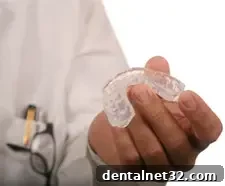
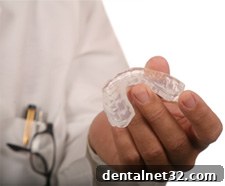
This is the gold standard of dental protection. A custom-fitted mouthguard is created by your dentist specifically for your mouth. The process is simple: your dentist takes a precise impression of your teeth, which is then sent to a dental laboratory where the mouthguard is professionally fabricated. The result is a protector that offers a perfect fit, providing maximum safety and comfort. It is durable, easy to clean, tasteless, odorless, and, most importantly, will not restrict your breathing or ability to speak clearly on the field. While the initial cost is higher, the superior protection and comfort make it a worthwhile investment.
A Smart Investment in Your Health and Safety
It’s easy to look at the price tag of a custom mouthguard, which can range from under $100 to over $300, and compare it to a $15 boil-and-bite option. But that comparison is short-sighted. The true value becomes clear when you weigh the cost of prevention against the cost of an injury.
“If you’re playing sports, you’re going to want a custom-made mouthguard,” Dr. Ghabbour emphasizes. “It’s like anything else in life: you’ve got to invest in the prevention or you’re going to spend a lot more money to fix the problem. It’s like insurance. When you need it, you’re happy it’s there.”
Investing in a custom-fitted mouthguard is investing in peace of mind. It’s choosing to pay a small, one-time fee to protect against a potential $20,000 dental disaster. Don’t wait for an accident to happen. Protect your athlete’s winning smile before the game even starts.
 About the Expert: Wesley Chapel dentist Diaa Ghabbour, DMD, has been practicing dentistry since 2000. He provides comprehensive general dentistry services to patients age 9 and up, including dental implant restorations, extractions, and periodontal disease management. Dr. Ghabbour is a member of the American Dental Association, Florida Dental Association, and the Academy of General Dentistry. He practices at Coast Dental Wesley Chapel, 5348 County Road 581, Wesley Chapel, Florida, 33544. The phone number is (813) 973-1837.
Reviewed By: Diaa Ghabbour, DMD
Reviewed By: Cindy Roark, DMD