

You diligently brush your teeth twice a day, but do you ever wonder if that’s truly enough for complete oral health? While brushing is a cornerstone of dental hygiene, it only cleans about 60% of your tooth surfaces. The other 40% lies between your teeth, a hidden battleground for plaque and bacteria. This is where flossing comes in. Understanding how often you should floss is not just a minor detail—it’s a critical component of a healthy smile and overall well-being. We recommend flossing at least once a day, and this guide will explore exactly why this simple habit is so powerful.

Why Flossing is a Non-Negotiable Part of Your Daily Routine
Think of brushing and flossing as a team. Brushing is fantastic for cleaning the broad, visible surfaces of your teeth, but its bristles simply cannot effectively reach the tight spaces between your teeth or the area just below the gumline. This is where food particles, sugar, and bacteria love to hide. When left undisturbed, these elements form a sticky, colorless film called plaque.
Flossing is the only tool specifically designed to disrupt and remove this plaque from these hard-to-reach areas. By mechanically clearing away debris, you prevent the bacteria from feasting on food particles and producing acids that erode tooth enamel. Regular flossing is a low-cost, high-impact preventative measure that acts as your first line of defense against a host of dental problems.
Without flossing, plaque accumulates along the gum line and eventually hardens into tartar (or calculus), a crusty deposit that can only be removed by a dental professional. Tartar buildup irritates the gums, leading to inflammation and the first stage of gum disease, known as gingivitis. If you neglect this crucial step, you could face significant health issues. For a deeper look, consider these eight health problems linked to not flossing.
In short, consistent flossing is essential to prevent:
- Gum Disease: It protects the foundation of your teeth by keeping your gums healthy and free from inflammation.
- Tooth Decay: It removes plaque from between teeth, a common area for cavities to develop.
- Tartar Buildup: It disrupts plaque before it has a chance to harden into stubborn tartar.
- Bad Breath (Halitosis): It eliminates decaying food particles and bacteria that are a primary source of unpleasant odors.
How Often Should You Floss? The Expert Consensus
The American Dental Association (ADA) and dental professionals worldwide agree on the optimal frequency: you should floss at least once every 24 hours. The reasoning is based on the life cycle of dental plaque. It takes approximately 24 to 48 hours for plaque to begin hardening into tartar. By flossing once a day, you consistently break this cycle, preventing tartar from ever forming.
While the frequency is key, the timing also matters. The best time to floss is at night, just before your final brushing session. This sequence—flossing first, then brushing—is proven to be more effective. Flossing dislodges food particles and plaque from between your teeth, bringing them out into the open. Following up with a thorough brushing then sweeps this debris away, while also allowing the fluoride from your toothpaste to better penetrate and protect the newly cleaned surfaces between your teeth.

The Powerful Health Benefits of Flossing Daily
If you’re only brushing, you’re missing a critical piece of the oral health puzzle. Integrating daily flossing into your routine offers profound benefits that extend beyond just a clean feeling. Here are five compelling reasons to make it a non-negotiable habit.
1. A Powerful Defense Against Tooth Decay
When sugary and starchy food particles get trapped between your teeth, they become a buffet for harmful bacteria. As these bacteria feed, they release acids that attack your tooth enamel. Over time, this acid erosion creates weak spots that develop into cavities. Since your toothbrush can’t clean these interdental spaces, flossing is your only effective tool for removing these cavity-causing culprits before they can do damage.
2. The Ultimate Weapon Against Gum Disease
Flossing doesn’t just clean your teeth; it’s vital for your gums. Plaque that accumulates along and just under the gum line causes inflammation, redness, and swelling—the classic signs of gingivitis. This condition affects nearly half of American adults. Left untreated, gingivitis can progress to periodontitis, a severe form of gum disease where the gums pull away from the teeth, leading to bone loss, infection, and eventually, tooth loss. Daily flossing is the most effective way to prevent this destructive chain of events.
3. A Simple Solution for Bleeding Gums
It’s a common misconception that you should stop flossing if your gums bleed. In reality, the opposite is true. Bleeding is a sign that your gums are inflamed due to plaque buildup. Flossing may initially irritate these sensitive tissues, causing them to bleed. However, by continuing to floss gently and consistently every day, you will remove the plaque causing the inflammation. Within a week or two, the bleeding should subside as your gums become healthier and more resilient.
4. A Fresh Approach to Better Breath
Chronic bad breath, or halitosis, isn’t just about what you ate for lunch. It’s often caused by bacteria and decaying food particles lingering in your mouth, particularly between your teeth. These particles release volatile sulfur compounds, which produce a foul odor. By flossing daily, you remove this source material, significantly reducing bacteria and leading to consistently fresher breath.
5. Protecting Your Overall Health and Smile
A commitment to daily oral hygiene—brushing twice a day, flossing once a day, and attending regular dental checkups—is the formula for a brilliant smile. It minimizes tartar buildup, which can stain teeth, and prevents the dark spots caused by interdental cavities. But the benefits go further. Research has shown a strong link between oral health and systemic health. By preventing gum disease, you reduce the risk of harmful bacteria entering your bloodstream and potentially contributing to other health issues, such as heart disease and diabetes.
Mastering the Proper Flossing Technique
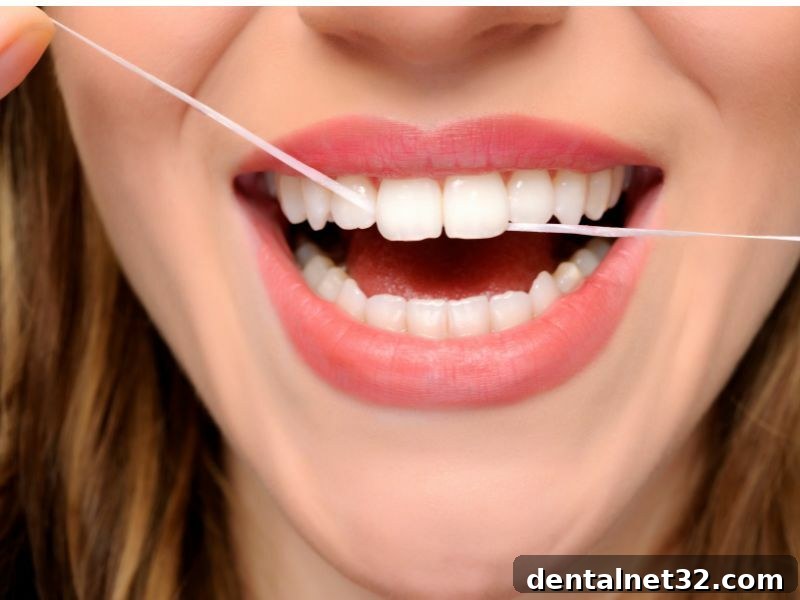
To get the full benefits, it’s crucial to floss correctly. Using the wrong technique can be ineffective or even damage your gums. While it takes a little practice, mastering the proper method is simple. For a complete guide, review these tips on effective brushing and flossing techniques. Here is a quick summary:
- Use Enough Floss: Start with about 18 inches of floss. Wrap most of it around one middle finger and a small amount around the other middle finger, which will take up the used floss.
- Guide Gently: Hold the floss taut between your thumbs and forefingers. Use a gentle back-and-forth “sawing” motion to guide it between your teeth. Never snap the floss down onto your gums.
- Form a “C” Shape: Once the floss is at the gum line, curve it into a “C” shape against one tooth. Slide it gently into the space between the gum and the tooth.
- Clean Thoroughly: Rub the side of the tooth, moving the floss away from the gum with up-and-down motions. Repeat on the adjacent tooth, then move to the next space, using a fresh section of floss each time.
Partner with Your Dentist for Optimal Oral Health
Your daily at-home care is the foundation of a healthy mouth, but it works best in partnership with professional dental care. Regular checkups and cleanings allow your dentist to remove any tartar buildup you’ve missed, spot potential issues before they become serious, and provide personalized advice for your oral hygiene routine. If you are due for a checkup, we invite you to visit one of our two convenient locations. Call our Holly Springs dentist office at (919) 600-6262 or our Cary, NC dentist office at (919) 467-2203. You can also use our online contact form to schedule an appointment today and take the next step toward a lifetime of healthy smiles.