
5 Warning Signs of a Dead Tooth: Causes, Symptoms, and Treatments
Have you ever had a nagging toothache that suddenly vanished? While you might feel relieved, this sudden absence of pain isn’t always a good sign. Sometimes, it can indicate a more serious underlying problem: a dead or dying tooth. A tooth is a living part of your body, complete with nerves and a blood supply. When that connection is severed, the tooth becomes non-vital, and ignoring it can lead to significant health complications.
Understanding the subtle signs of a dying tooth is crucial for seeking timely treatment and protecting your overall oral health. Many people associate dental problems with sharp, persistent pain, but a dead tooth can often be surprisingly quiet in its early stages. This guide will walk you through the five key warning signs, explain the causes, and outline the effective treatments available to save your smile.
What Exactly Is a Dead Tooth?
To understand what a dead tooth is, it’s helpful to know the basic anatomy of a tooth. Each tooth has three main layers: the hard, outer enamel; the softer, yellowish dentin beneath it; and the innermost core called the pulp. The pulp is a soft tissue chamber containing a network of blood vessels, nerves, and connective tissue. This is the “living” part of the tooth, responsible for providing nutrients and sensation.
A tooth is considered “dead” or “non-vital” when the blood flow to the pulp is cut off. Without a steady supply of blood, the nerves and other tissues inside the pulp chamber die. This process, known as pulp necrosis, means the tooth can no longer feel hot or cold sensations and is essentially no longer a living structure. However, it can remain in your mouth, where it becomes a breeding ground for bacteria and infection.
Common Causes: Why Do Teeth Die?
A tooth doesn’t just die without reason. The loss of blood supply to the pulp is typically caused by one of two main issues: significant trauma or progressive decay.
Dental Trauma or Injury
A sudden, forceful impact to the face or mouth can have serious consequences for your teeth. This can happen during a sports injury, a fall, a car accident, or even by biting down unexpectedly on something hard like a nut or ice. The trauma can damage or sever the delicate blood vessels at the tip of the tooth’s root, immediately cutting off the blood supply. In some cases, the damage isn’t apparent right away, and the tooth may die slowly over several months or even years following the injury.
Deep Tooth Decay and Infection
This is the most common cause of a dead tooth. It begins with a simple cavity. If left untreated, tooth decay allows bacteria to penetrate through the protective enamel and dentin layers, eventually reaching the sterile pulp chamber. Once inside, the bacteria multiply, leading to a painful infection called pulpitis. In the initial stages (reversible pulpitis), the inflammation might be manageable if the decay is removed. However, if the infection progresses (irreversible pulpitis), the inflammation and bacterial pressure will ultimately destroy the pulp tissue and cut off its blood supply, causing the nerve to die.
The 5 Telltale Signs of a Dying Tooth
Recognizing the signs of a non-vital tooth is the first step toward getting the treatment you need. While some symptoms are obvious, others are more subtle. Here are the five most common indicators to watch for.
1. Changes in Tooth Color
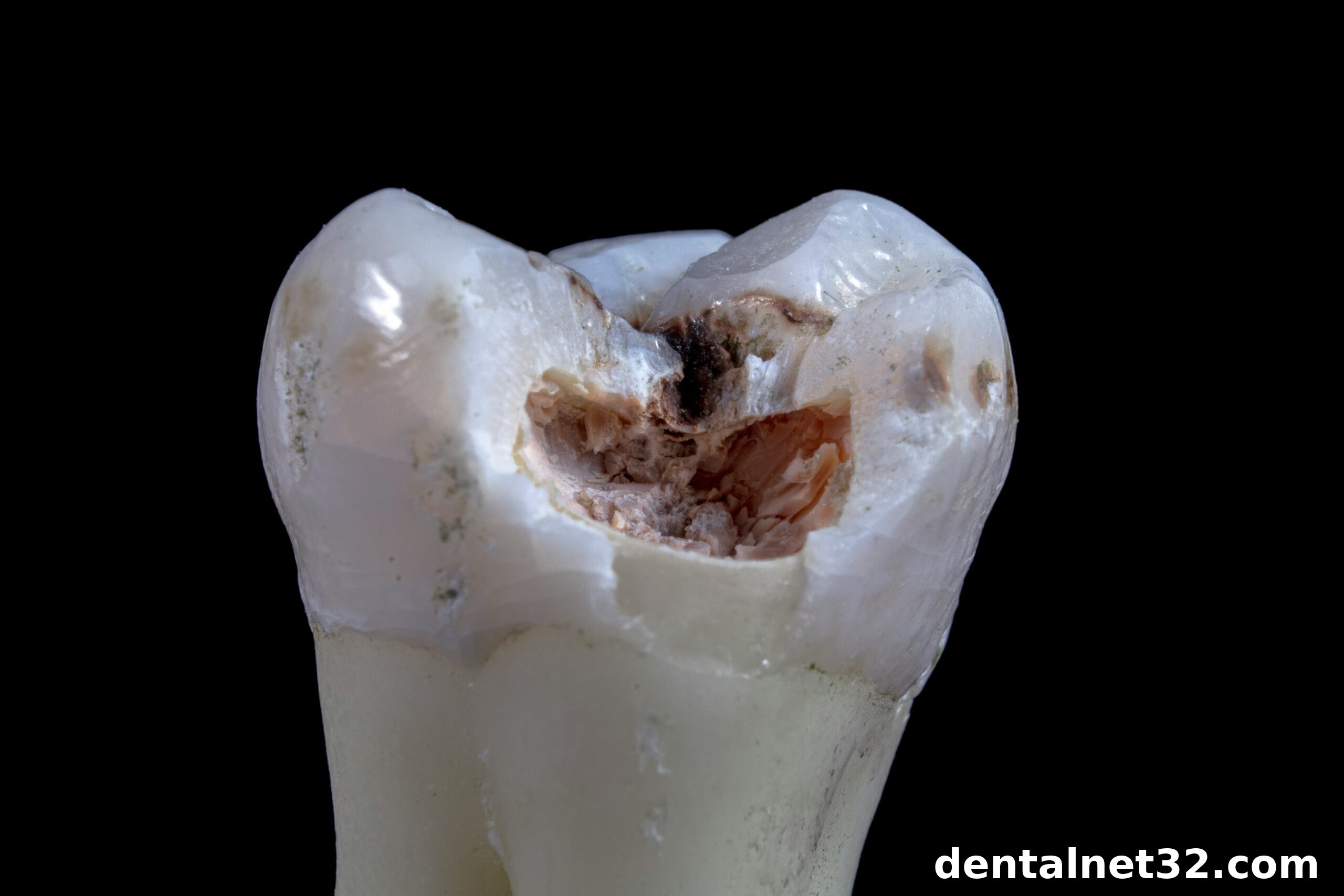
One of the most visible and reliable signs of a dead tooth is discoloration. A healthy tooth is typically a shade of white, but a non-vital tooth may turn yellow, light brown, gray, or even black over time. This color change happens from the inside out. When the pulp dies, the red blood cells break down and release hemoglobin, which seeps into the microscopic tubules of the surrounding dentin layer. This internal staining is why professional teeth whitening treatments are ineffective for a dead tooth; the discoloration is not on the surface.
2. Tooth Pain or Discomfort
Pain associated with a dead tooth can be confusing. You might experience excruciating pain as the nerve is dying due to infection and inflammation. Then, once the nerve has completely died, that specific throbbing pain may disappear, leading you to believe the problem has resolved itself. However, the infection often remains. Pain can return as pressure builds up inside the tooth or as the infection spreads into the surrounding ligament and jawbone. This pain is often felt when you bite down or chew, as the pressure is being placed on the sensitive, infected tissues around the root of the tooth, not the dead nerve itself.
3. Swelling and Bumps on the Gums
When the infection from a dead tooth has nowhere else to go, it can spread through the tip of the root and into the surrounding jawbone. This often leads to a pocket of pus known as a dental abscess. An abscess can cause significant swelling in the gums near the affected tooth, and you may also notice swelling in your face or jaw. Sometimes, the pressure from the abscess creates a small channel to drain the pus, resulting in a pimple-like bump on the gum, called a fistula or sinus tract. This is a serious sign of a widespread infection that requires immediate dental care.
4. A Persistent Bad Taste or Foul Odor
An active infection inside a dead tooth produces a foul odor and taste. The combination of decaying tissue and bacterial byproducts can lead to chronic bad breath (halitosis) that doesn’t go away with brushing or mouthwash. You might also notice an unpleasant, salty, or metallic taste in your mouth, which could be from pus draining from an abscess. This symptom, often referred to as a “dead tooth smell,” is a clear indicator of an underlying infection.
5. Sensitivity to Heat
While a dead tooth won’t feel cold sensations, it may become acutely sensitive to heat. When you drink a hot beverage like coffee or tea, the heat can cause the gases produced by the bacteria inside the dead pulp chamber to expand. This expansion creates pressure inside the tooth, pushing against the sensitive tissues in the jawbone and causing a sharp, lingering pain. This specific reaction to heat is a classic diagnostic sign of a non-vital tooth with an infection.
How a Dentist Diagnoses a Non-Vital Tooth
If you suspect you have a dead tooth, it is essential to see a dentist for a proper diagnosis. A professional examination will confirm the tooth’s vitality and determine the extent of any infection. Your dentist will likely perform several tests:
- Visual Exam: Checking for discoloration, cracks, or signs of decay.
- Percussion Test: Gently tapping on the tooth to check for sensitivity in the surrounding ligaments, which indicates inflammation or infection.
- Pulp Vitality Testing: Applying a cold stimulus to the tooth. A living tooth will react to the cold, while a dead tooth will not feel it at all.
- Dental X-rays: An X-ray is crucial for seeing what’s happening below the gumline. It can reveal an abscess at the root tip, bone loss, and the extent of any decay.
Treatment Options: Can a Dead Tooth Be Saved?
Yes, in most cases, a dead tooth can be saved and restored to full function. The goal of treatment is to remove the infection and protect the tooth from further damage. The two primary treatment options are root canal therapy and extraction.
Root Canal Therapy: The Tooth-Saving Solution
A root canal is the standard and preferred treatment for a dead tooth. Despite its reputation, modern root canal therapy is a comfortable and highly effective procedure designed to save your natural tooth. During the treatment, the dentist removes the dead pulp, thoroughly cleans and disinfects the inside of the tooth, and then fills and seals the space to prevent re-infection. After the root canal is complete, the tooth becomes brittle, so a dental crown is typically placed over it to provide strength and protection, allowing it to function like any other tooth.
Tooth Extraction: The Last Resort
If the tooth is severely damaged, has a large fracture, or if the infection has caused significant bone loss, saving it may not be possible. In these situations, a tooth extraction is necessary to remove the source of infection and protect your overall health. After an extraction, it is important to discuss replacement options, such as a dental implant, bridge, or partial denture, to prevent neighboring teeth from shifting and to restore your bite.
Think You Have a Dead Tooth? Contact Us Today
Ignoring the signs of a dead or dying tooth can lead to severe pain, a widespread infection that can affect your overall health, and ultimately, tooth loss. Early intervention is the key to a better outcome. If you are experiencing any of the symptoms described above, it is crucial to seek professional dental care.
At our dental office in Locust, NC, our experienced and compassionate dentists are here to help. We will perform a thorough examination to diagnose the problem, explain your treatment options clearly, and provide the gentle care you need to restore your oral health. Don’t wait for the problem to get worse. Schedule your appointment today to get the relief you need and protect your smile for years to come.