
Understanding Tooth Anatomy: A Comprehensive Guide to Your Smile
Your teeth are remarkable structures, essential for eating, speaking, and shaping your facial features. While they may seem small and simple, each tooth is a complex organ with distinct layers and parts, all working together to function throughout your lifetime. Understanding the fundamentals of tooth anatomy is not just for dentists; it’s crucial knowledge for anyone who wants to maintain excellent oral health and prevent common dental problems. This comprehensive guide will delve into the intricate world inside your mouth, exploring the layers, parts, and types of teeth that make up your unique smile.
The Intricate Layers of a Tooth: A Look Inside
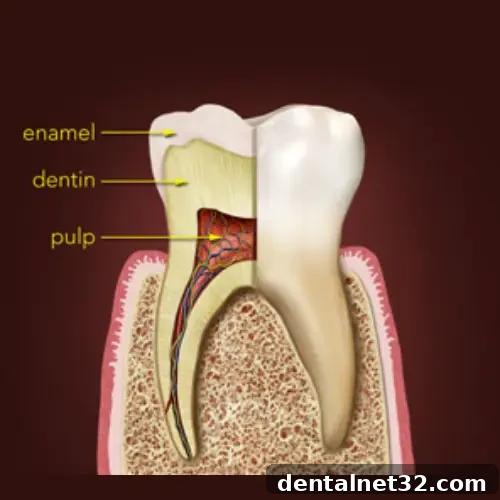
Every tooth, regardless of its shape or function, is composed of three primary layers: the enamel, the dentin, and the pulp. Each layer has a specific role in protecting the tooth and enabling its function. Problems arise when the integrity of these layers is compromised.
1. Enamel: The Body’s Hardest Protector
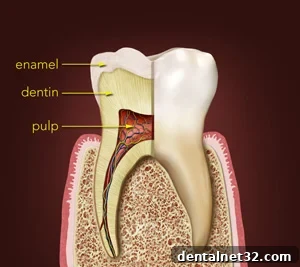
The outermost layer of your tooth is the enamel. Composed mainly of a crystalline calcium phosphate mineral called hydroxyapatite, enamel is the hardest and most highly mineralized substance in the human body. Its primary function is to act as a durable shield, protecting the sensitive inner layers from the pressures of chewing, extreme temperatures, and harmful acids. However, despite its incredible strength, enamel has a significant vulnerability: it cannot regenerate. Once it’s lost due to decay or erosion, it’s gone for good. The main threat to enamel is acid. Bacteria in your mouth feed on sugars and starches, producing acids that attack the enamel in a process called demineralization. This constant acid attack can lead to dental caries, more commonly known as cavities. To protect this vital layer, it’s essential to practice diligent oral hygiene: brush at least twice daily with fluoride toothpaste, floss once a day to remove plaque from between teeth, limit sugary and acidic foods, and visit your dentist for regular cleanings.
2. Dentin: The Sensitive Core
Beneath the hard enamel lies the dentin, a layer of hard, dense, bony tissue that forms the bulk of the tooth. Dentin is softer than enamel and has a more yellowish hue, which can become more visible if the enamel thins. What makes dentin unique is its microscopic structure, which is riddled with thousands of tiny channels called tubules. These tubules run from the outer surface of the dentin directly to the central pulp. When enamel wears away, these tubules become exposed. External stimuli like hot, cold, sweet, or acidic substances can then travel through these channels and stimulate the nerves inside the tooth, causing the sharp, sudden pain known as tooth sensitivity. Anything that exposes dentin—from untreated cavities and gum recession to aggressive brushing or teeth grinding—can trigger this discomfort. If you experience sensitivity, it’s a sign that your tooth’s defenses are compromised, and you should consult your dentist to identify the cause and find a solution.
3. Pulp: The Living Heart of the Tooth
At the very center of each tooth is the pulp, the softest and most vital layer. The pulp chamber contains a rich network of blood vessels, connective tissues, and nerves, which extend down through the root canals. This living tissue has several crucial functions: it provides nutrients to the dentin to keep it healthy, it’s responsible for the sensory perception of temperature and pressure, and it helps form new dentin in response to trauma. When a cavity progresses through the enamel and dentin and reaches the pulp, the bacteria can cause a painful infection and inflammation known as pulpitis. If left untreated, this infection can lead to an abscess and the death of the tooth. In such cases, a root canal therapy is often necessary to remove the infected pulp, clean the inside of the tooth, and seal it to prevent further infection and save the tooth from extraction.
Mapping the Tooth: The Main Structural Parts
Beyond its layers, a tooth is divided into several key structural parts, each with a specific name and purpose. Understanding this external anatomy helps in conversations with your dental professional and provides a clearer picture of your oral health.
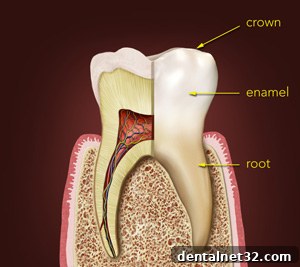
- Crown: The crown is the visible portion of the tooth that sits above the gum line. Its shape is specifically designed for the tooth’s function—whether it’s for slicing, tearing, or grinding food. The crown’s surface is entirely covered by the protective enamel.
- Root: The root is the part of the tooth that extends below the gum line, anchoring it firmly into the jawbone. Depending on the tooth type, it can have one or more roots. The root is not covered by enamel but by a different hard tissue called cementum.
- Gum Line (or Neck): This is the area where the crown and the root meet. It’s a critical zone for oral hygiene, as plaque can easily accumulate here, leading to gingivitis (inflammation of the gums) and, if untreated, more severe periodontal disease.
- Cementum: Cementum is a specialized, calcified substance that covers the entire surface of the tooth’s root. While not as hard as enamel, its primary role is to attach the tooth to the jawbone via the periodontal ligament.
- Periodontal Ligament: This is a group of specialized connective tissue fibers that essentially attach the tooth’s root (via the cementum) to the alveolar bone of the jaw. It acts as a shock absorber, cushioning the tooth from the forces of chewing.
A Tour of Your Mouth: The Four Types of Teeth
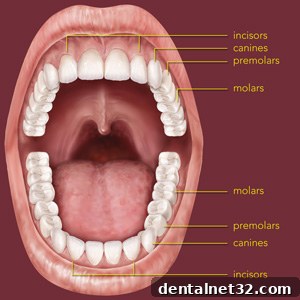
An adult human mouth typically contains 32 permanent teeth, which are classified into four distinct types. Each type has a unique shape and a specialized role in the process of mastication (chewing).
1. Incisors
Located at the very front of your mouth, you have eight incisors in total—four on the top and four on the bottom. With their sharp, chisel-like edges, their primary function is to cut and slice food when you take a bite. They are also prominent in your smile and play a significant role in speech pronunciation.
2. Canines
Positioned at the corners of your dental arches are the canines, also known as cuspids. You have four of them, one on each side of the incisors on both the upper and lower jaws. Their pointed shape is perfectly designed for gripping and tearing food, particularly tougher items like meat. Canines typically have the longest roots of any teeth, making them exceptionally stable and strong.
3. Premolars
Moving further back in the mouth, you’ll find the premolars, or bicuspids. Adults have eight premolars—two on each side of the canines on both jaws. These teeth serve as a transition between the tearing canines and the grinding molars. They have flatter chewing surfaces with two points (cusps), allowing them to both tear and crush food.
4. Molars
At the very back of your mouth are the molars, your largest and strongest teeth. A typical adult has twelve molars—six on top and six on the bottom, including the four wisdom teeth (third molars). Their broad, flat surfaces with multiple cusps make them ideal for the final stage of chewing: grinding and crushing food into small, easily digestible pieces before swallowing.
Putting Knowledge into Practice for a Lifetime of Health
Every single tooth in your mouth is a vital part of a complex, functioning system. Understanding their anatomy highlights the importance of comprehensive care. Healthy enamel protects the sensitive dentin; a secure root anchors the tooth for powerful chewing; and each type of tooth performs a unique task. By protecting these structures through proper brushing, daily flossing, a balanced diet low in sugar, and regular dental check-ups, you can prevent decay, combat gum disease, and maintain a healthy, functional smile for life. If you have any questions about your oral health or wish to schedule an appointment, don’t hesitate to contact your local dentist today.