
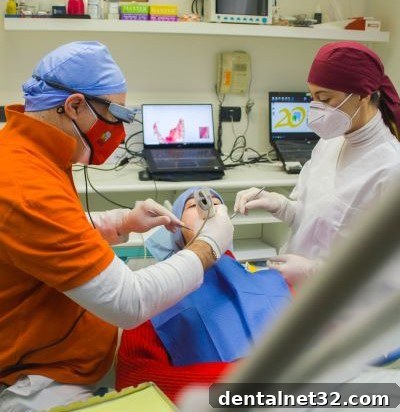
Losing a tooth can significantly impact your daily life, affecting everything from your ability to chew comfortably to your confidence when you smile. For decades, the primary solutions were traditional bridges and dentures. While effective, these options often come with their own set of challenges. Today, thanks to remarkable advancements in dental technology, there’s a revolutionary and permanent solution: dental implants. This state-of-the-art treatment has transformed the lives of millions, restoring not just smiles but also full dental function and self-esteem.
While millions of Americans experience tooth loss from decay, gum disease, or injury, you no longer have to settle for a temporary fix. Dental implant surgery offers a durable, stable, and natural-looking alternative. The procedure itself depends on several factors, including the type of implant used and the health of your jawbone. At Sninski & Schmitt Family Dentistry, with convenient locations in Cary and Holly Springs, we specialize in providing patients with this life-changing solution. If you’re considering this option, this comprehensive guide will walk you through everything involved in the dental implant surgery process.
What Are Dental Implants? A Permanent Solution for Missing Teeth
A dental implant is much more than just a replacement tooth; it’s a replacement for the entire tooth structure, including the root. This is the key to its incredible stability and longevity. The implant itself is a small, screw-like post, typically made from biocompatible titanium. This post is surgically placed into your jawbone, where it acts as a sturdy anchor, mimicking a natural tooth root.
Over a period of a few months, a remarkable process called osseointegration occurs. During this time, the jawbone naturally grows around and fuses with the titanium implant, creating an incredibly strong and permanent foundation. Because the implant becomes part of your jaw, it won’t slip, make noise, or cause the bone deterioration often associated with bridges and dentures. The materials are exceptionally strong and are not susceptible to decay, unlike the natural teeth that might support a traditional bridge.
Once the implant is securely integrated, it can support a variety of restorations, providing a solid base for a single crown, a multi-tooth bridge, or even a full set of dentures.
The Dental Implant Surgery Process: A Detailed Step-by-Step Guide
Dental implant surgery is a highly predictable and successful procedure, but it’s important to understand that it’s a multi-stage process, not a single appointment. The entire journey, from initial consultation to the final placement of your new tooth, can take several months. This timeline is necessary to allow for proper healing and to ensure the implant fully integrates with your jawbone, guaranteeing a successful and long-lasting outcome. Let’s break down the process into clear, manageable steps.
Step 1: The Initial Consultation and Treatment Planning
Your journey begins with a thorough evaluation to ensure you’re a good candidate and to create a customized treatment plan. This initial phase is crucial for success and often involves a team of dental professionals, which may include an oral surgeon, a periodontist (gum specialist), and a prosthodontist (restoration specialist).
During this stage, you can expect:
- A Comprehensive Dental Exam: We will take detailed dental X-rays and advanced 3D images (like a CBCT scan). These images allow us to assess the health and density of your jawbone and map out the precise placement for the implant. We will also create models of your teeth and jaw.
- A Thorough Review of Your Medical History: It’s vital to discuss your overall health, any existing medical conditions, and all medications you take, including prescriptions, over-the-counter drugs, and supplements. For patients with certain heart conditions or orthopedic implants, a course of preventive antibiotics may be prescribed before surgery.
- A Personalized Treatment Plan: Based on the exam and your unique needs, our team will develop a tailored treatment plan. This plan will outline every step of the process, including the number of teeth being replaced, the status of your jawbone, and the timeline for your procedures.
- Discussion of Anesthesia Options: Patient comfort is a top priority. We will discuss your anesthesia options to control any discomfort during the surgery. These options typically include local anesthesia, IV sedation, or general anesthesia. We will help you choose the best option for your comfort level and provide clear instructions on eating and drinking before your procedure. If you opt for sedation or general anesthesia, you will need to arrange for someone to drive you home afterward.
Step 2: Placing the Titanium Dental Implant
This is the core surgical step where the foundation for your new tooth is laid. During this procedure, your oral surgeon will make a small, precise incision in your gum tissue to expose the underlying jawbone. Using specialized instruments, a small opening is created in the bone, and the titanium implant post is carefully placed. The gum tissue is then repositioned over the implant.
After placement, the most important phase begins: osseointegration. For the next three to six months, your jawbone will heal and grow around the implant, locking it securely in place. This biological fusion is what gives a dental implant its unparalleled strength and stability.
Optional Step: Bone Grafting for a Solid Foundation
For a dental implant to be successful, it needs to be surrounded by a sufficient amount of healthy bone. If a tooth has been missing for a long time, the jawbone in that area may have deteriorated or become too soft. In these cases, a bone graft may be necessary to create a more solid base for the implant.
A bone graft involves placing bone material (which can be from another part of your body, a donor source, or a synthetic material) in the deficient area of your jaw. This graft acts as a scaffold, stimulating your body to grow new, dense bone. It can take several months for the graft to mature and be ready to support an implant, but this step is essential for the long-term success of the procedure.
Step 3: Attaching the Abutment
Once osseointegration is complete and the implant is firmly fused to your jawbone, the next step is to place the abutment. The abutment is a small connector post that attaches to the top of the implant and sits just above the gum line. It serves as the docking station for your final crown or artificial tooth.
Placing the abutment is a minor procedure, often performed with local anesthesia. Your surgeon will reopen the gum to expose the implant, attach the abutment, and then shape the gum tissue around it. Your gums will need about two weeks to heal around the abutment before the final tooth can be placed.
Step 4: Crafting and Placing Your New Artificial Tooth
After your gums have fully healed, we will take new impressions of your mouth. These impressions are sent to a dental laboratory, where your custom artificial tooth, or crown, will be meticulously crafted. We pay close attention to matching the color, size, and shape of your surrounding natural teeth to ensure a seamless and beautiful result. Your new tooth will not only look but also feel and function just like a natural one.
You have different options for your final restoration:
- Fixed: This is the most common option for a single tooth replacement. A custom crown is permanently cemented or screwed onto the abutment. Because implants are so strong, multiple teeth can sometimes be replaced by a fixed bridge that is anchored to just a few implants.
- Removable: For patients replacing multiple or all of their teeth, an implant-supported denture is an excellent choice. This restoration looks like a traditional denture but snaps securely onto the implant abutments. It offers far greater stability than conventional dentures and can be removed for easy daily cleaning.
Step 5: Recovery and Aftercare
Following any stage of the surgery, it’s normal to experience some mild discomfort. Common symptoms include:
- Minor swelling of the gums and face
- Slight bruising on the skin or gums
- Pain at the implant site
- Minimal bleeding
Your surgeon may prescribe pain medication or antibiotics to ensure your comfort and prevent infection. It’s important to contact your surgeon if discomfort or swelling worsens in the days following the procedure. During the healing periods, you will be advised to eat soft foods to avoid putting pressure on the surgical site. Most stitches used are self-dissolving, but if not, they will be removed at a follow-up appointment.
Step 6: Ensuring Long-Term Success of Your Dental Implant
Dental implants have an incredibly high success rate. However, their longevity depends on excellent oral hygiene. On rare occasions, the bone may fail to fuse sufficiently with the implant. In such cases, the implant is removed, the area is allowed to heal, and the procedure can often be attempted again in a few months.
To ensure your dental implant lasts a lifetime, you should:
- Practice Excellent Oral Hygiene: Brush and floss daily, just as you would with your natural teeth.
- Visit Your Dentist Regularly: Schedule routine check-ups and cleanings to maintain the health of your implant and surrounding tissues.
- Avoid Damaging Habits: Refrain from chewing on hard items like ice or hard candy, which can damage the crown. Avoid tooth-staining products and seek treatment if you grind your teeth.
Contact Sninski & Schmitt Family Dentistry to Restore Your Smile
If you’re ready to explore a permanent solution for missing teeth and reclaim your smile and confidence, dental implants may be the perfect choice for you. We offer comprehensive dental implant services at both our Cary and Holly Springs locations. Contact us today to schedule your consultation. Reach our Holly Springs dentist office at (919)-600-6262 or our Cary dentist office at (919) 467-2203. You can also easily schedule an appointment by filling out our online contact form.