
Tetracycline Stains: A Comprehensive Guide to Restoring Your Smile
Do you often find yourself hiding your smile due to deep-set, stubborn stains that no whitening treatment seems to touch? If your teeth have a grayish, brownish, or even bluish hue, you might be dealing with tetracycline stains. This condition affects a significant number of people, particularly those over the age of 45, and can be a source of considerable self-consciousness. The good news is that modern cosmetic dentistry offers incredible, permanent solutions to restore your confidence and give you a smile you’ll be proud to share. This guide will explore the causes of tetracycline stains, why traditional methods fail, and the transformative treatments that can give you a brilliant, flawless smile.
Understanding the Root Cause: What Are Tetracycline Stains?
To understand the solution, it’s crucial to grasp the problem. Tetracycline is a broad-spectrum antibiotic that was widely prescribed from the 1950s through the 1980s for various bacterial infections, from ear infections to severe acne. While effective, it had an unforeseen side effect. When administered to pregnant women or young children (typically under the age of 8) whose adult teeth were still developing beneath the gums, the drug would interfere with the tooth formation process.
The Science Behind Intrinsic Discoloration
Unlike stains from coffee or red wine, which are extrinsic (on the surface enamel), tetracycline stains are intrinsic, meaning they are embedded within the tooth structure itself. The medication has a chemical affinity for calcium, so as the tooth’s dentin (the layer beneath the enamel) was mineralizing, the tetracycline molecules would bind with the calcium ions. This process permanently integrated the discoloration into the tooth’s very structure. When these teeth are later exposed to light, the tetracycline compound oxidizes, causing the stains to darken over time, often into distinct horizontal bands of gray, brown, or yellow.
Why Traditional Teeth Whitening Is Ineffective
Many people with tetracycline-stained teeth waste time and money on over-the-counter whitening strips, gels, and even professional bleaching treatments, only to be disappointed with the results. The reason is simple: these whitening methods are designed to work on the tooth’s surface. The active ingredients, such as hydrogen peroxide or carbamide peroxide, penetrate the enamel to break down extrinsic stains. However, they are not powerful enough to reach deep into the dentin and alter the fundamental, mineralized discoloration caused by tetracycline. In some cases, whitening can even make the stains appear more prominent by lightening the surrounding enamel, thus increasing the contrast.
The Definitive Solutions: Porcelain Veneers vs. Dental Crowns
Since the stains cannot be removed, the most effective approach is to cover them. Cosmetic dentistry offers two premier solutions that provide durable, beautiful, and natural-looking results: porcelain veneers and dental crowns. The best choice depends on the severity of the staining, the health of your existing teeth, and your personal smile goals.
Porcelain Veneers: A Conservative Transformation
Porcelain veneers are ultra-thin, custom-crafted shells of ceramic that are bonded to the front surface of your teeth. They are an excellent option for mild to moderate tetracycline staining. The process involves removing a very small amount of enamel from the front of the tooth to ensure the veneer sits flush and looks natural. Veneers are renowned for their ability to mimic the light-reflecting properties of natural teeth, providing a stunningly realistic result.
- Procedure: Typically requires two visits. The first is for consultation and tooth preparation, where impressions are taken. The second is for bonding the final, custom-made veneers to your teeth.
- Advantages: A more conservative approach that preserves most of the natural tooth structure. Highly stain-resistant and durable.
- Considerations: For extremely dark, severe tetracycline bands, the discoloration may still be slightly visible through the thin porcelain.
Dental Crowns: The Ultimate Smile Makeover
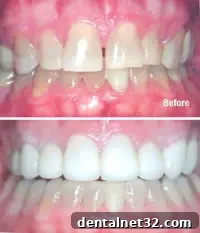
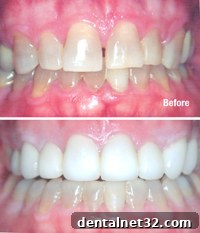
For severe, deep-set tetracycline stains, full-coverage dental crowns are the gold standard. A crown, also known as a cap, covers the entire visible portion of the tooth down to the gum line. Because it completely encases the natural tooth, it provides a total block-out of any underlying discoloration, regardless of how dark it is. Modern all-porcelain crowns offer exceptional strength and aesthetics, making them indistinguishable from natural teeth.
- Procedure: Also a two-visit process. The first involves reshaping the tooth to accommodate the crown and taking impressions. You’ll leave with a temporary crown. At the second visit, the permanent crown is checked for fit and color before being permanently cemented in place.
- Advantages: Offers complete and total coverage of stains. Restores the tooth’s shape, size, and strength. The most durable and long-lasting solution for severe cases.
- Considerations: Requires more significant removal of the natural tooth structure compared to veneers.

A Real-Life Transformation: Craig’s Story
The life-changing impact of this treatment is best illustrated through a patient’s experience. Craig McEntyre spent years feeling held back by his tetracycline-stained teeth. He chose to pursue a smile makeover and opted for full-coverage, all-porcelain crowns to achieve the complete transformation he desired.
His treatment was performed by Dr. Diaa Ghabbour at Coast Dental Wesley Chapel. The process began with a detailed consultation where Dr. Ghabbour assessed his teeth and discussed the best options. The first major appointment took about four hours, during which Dr. Ghabbour skillfully prepared eight of Craig’s top teeth and took precise impressions for the dental lab to fabricate the custom crowns. Craig was fitted with temporary crowns to protect his teeth and maintain his appearance while the permanent ones were being made.
About three weeks later, Craig returned for his final appointment. In less than two hours, his temporary crowns were removed, and the permanent, beautifully crafted porcelain crowns were bonded into place. The change was not just immediate—it was profound. More than five years after his procedure, Craig’s smile remains as brilliant and flawless as ever.
“I still get compliments every day about having a nice smile,” Craig shares. One of the greatest benefits is the peace of mind that comes with porcelain restorations; they will never stain, change color, or fade. Craig’s story is a powerful testament to how a cosmetic dental procedure can restore not just a smile, but also a person’s confidence and quality of life.
Your Journey to a Flawless Smile
If you’ve been living with tetracycline stains, there is no reason to feel embarrassed or ashamed. A beautiful, confident smile is within your reach. The first step is to schedule a consultation with an experienced cosmetic dentist. During this visit, your dentist will evaluate your unique situation and discuss which treatment—veneers or crowns—is the ideal path to help you achieve your goals.

Meet Your Wesley Chapel Dentist, Dr. Diaa Ghabbour, DMD, a skilled practitioner with a passion for cosmetic and restorative dentistry since 2000. He is dedicated to helping patients of all ages achieve optimal oral health and stunning smiles. Dr. Ghabbour provides a wide range of general and cosmetic dentistry services, including expert dental implant restorations, extractions, and periodontal care. As a proud member of the American Dental Association, Florida Dental Association, and the Academy of General Dentistry, he remains at the forefront of dental innovation. You can find him at Coast Dental Wesley Chapel, located at 5348 County Road 581, Wesley Chapel, Florida, 33544. To schedule your smile makeover consultation, please call (813) 973-1837.
Reviewed by: Craig McEntyre
Reviewed by: Diaa Ghabbour, DMD
Reviewed by: Cindy Roark, DMD